
A picosecond laser machine is a high-performance medical aesthetic device that uses ultra-short pulses to treat pigmentation, tattoos, and skin rejuvenation with minimal downtime. For clinics, choosing a professional picosecond laser with multi-wavelength technology, high peak power, and MDR certification ensures better treatment results, faster ROI, and long-term business growth.
Introduction
The demand for advanced aesthetic treatments continues to rise in 2026, driven by increasing consumer awareness of skin health, tattoo removal, and non-invasive rejuvenation. Among all technologies, the picosecond laser machine has become a top-tier investment for clinics and medspas.
However, not all picosecond lasers are created equal.
Many clinic owners face confusion when comparing different devices: pulse duration, wavelengths, certifications, and price points vary significantly. Choosing the wrong machine can lead to poor results, dissatisfied clients, and slow return on investment.
This guide will help you understand how to choose the best picosecond laser machine for your clinic, focusing on technology, performance, certification, and profitability.
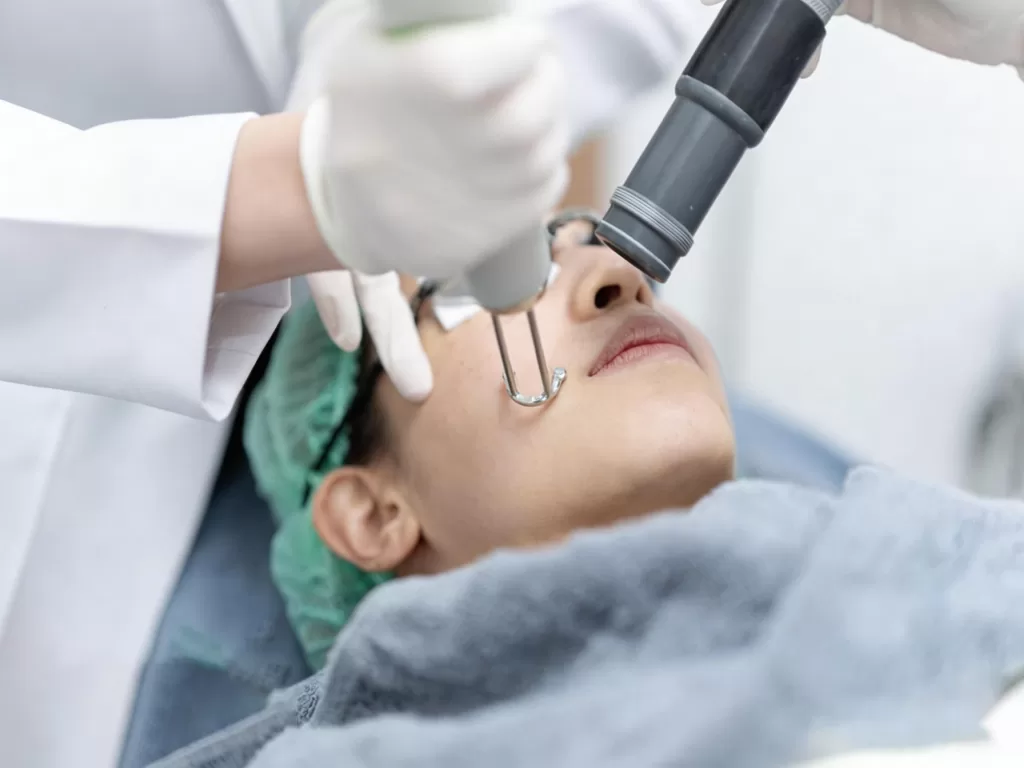
What Is a Picosecond Laser Machine?
Picosecond emit laser pulses in picoseconds (one trillionth of a second). This ultra-short pulse duration allows the laser energy to interact with pigment particles in a fundamentally different way compared to traditional lasers.
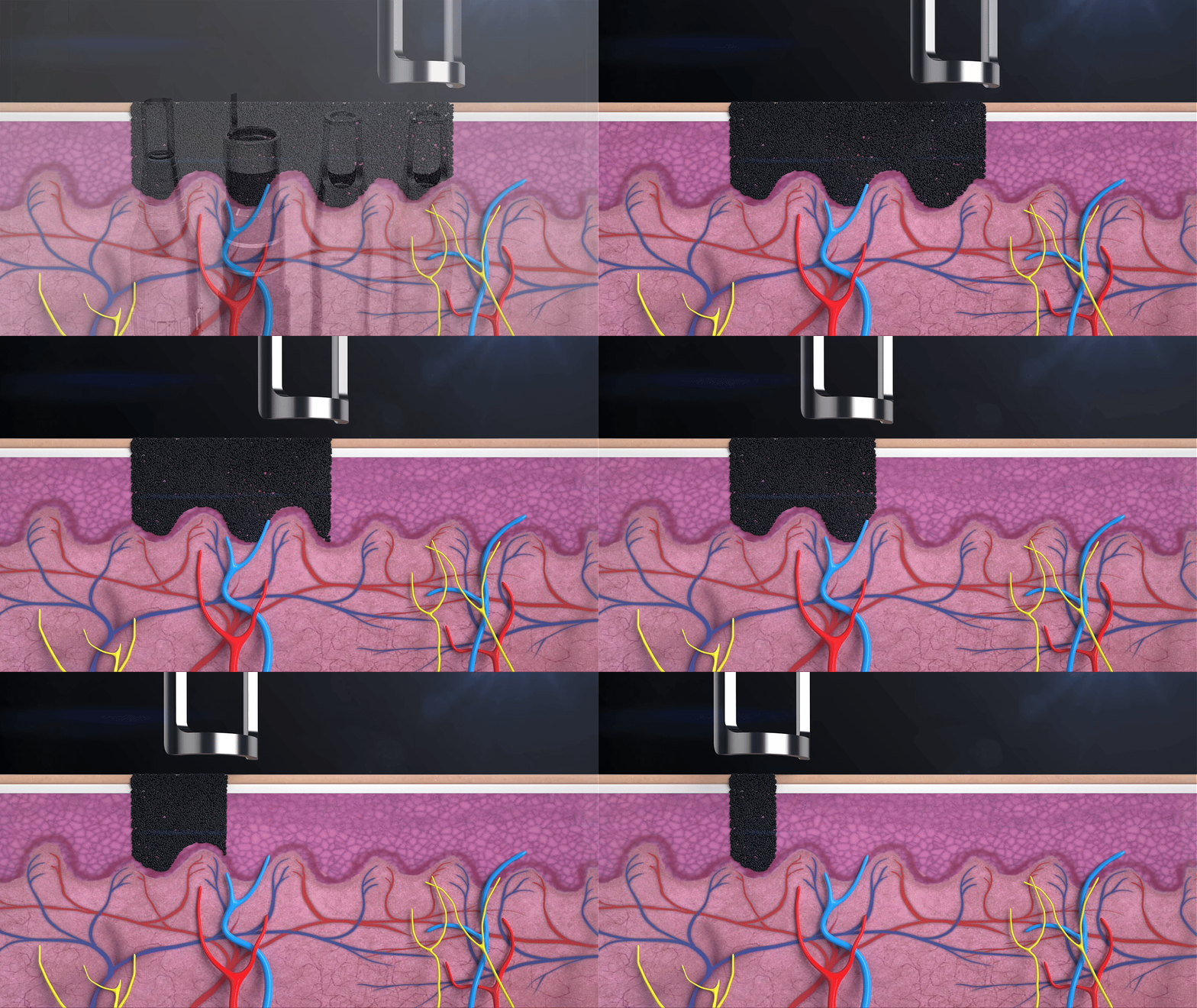
Instead of relying mainly on heat, picosecond lasers use a photoacoustic effect to shatter pigment into tiny particles that the body can naturally eliminate.
Key Benefits:
- Faster treatment results
- Reduced thermal damage
- Safer for the surrounding tissue
- Suitable for multiple skin types
How Does a Picosecond Laser Work?
Picosecond lasers target melanin and tattoo ink using high peak power delivered in extremely short bursts.
The process:
- Laser energy penetrates the skin
- Pigment absorbs the energy
- Pigment shatters into microscopic particles
- The body removes particles via metabolism
Because the pulse duration is so short, less heat accumulates in the skin, which means:
- Minimal downtime
- Lower risk of hyperpigmentation
- Faster recovery
Picosecond Laser vs Nanosecond Laser
| Feature | Picosecond Laser | Nanosecond Laser |
|---|---|---|
| Pulse Duration | 10⁻¹² s | 10⁻⁹ s |
| Mechanism | Photoacoustic | Photothermal |
| Skin Damage | Minimal | Moderate |
| Sessions Required | Fewer | More |
| Patient Comfort | Higher | Lower |
| ROI for Clinics | High | Medium |
👉 Conclusion: Picosecond lasers outperform traditional Q-switched (nanosecond) lasers in both clinical results and business returns.
Key Features of a High-Quality Picosecond Laser Machine
1. Ultra-Short Pulse Width (e.g., 350ps)
Because Shorter pulse duration = stronger photoacoustic effect.
Benefits:
- More effective pigment fragmentation
- Fewer treatment sessions
- Better client satisfaction
2. Multi-Wavelength System
A high-end system should include multiple wavelengths to treat different conditions:
- 1064nm – deep pigments, dark tattoos
- 532nm – superficial pigments, red ink
- 755nm – skin rejuvenation, melasma
- 585nm / 650nm – colorful tattoos
👉 This allows clinics to expand service offerings significantly.
3. Multiple Treatment Modes
Advanced machines offer different pulse modes:
- Picosecond mode
- Multi-pulse mode
- Long pulse mode
- Fractional/PTP mode (collagen stimulation)
👉 One machine = multiple revenue streams.
4. High Peak Power
Higher peak power ensures:
- Stronger pigment breakdown
- Fewer sessions required
- Better treatment efficiency
Why MDR Certification Matters in Choosing a Laser Machine
One of the most overlooked—but critical—factors is certification.
What Is MDR?
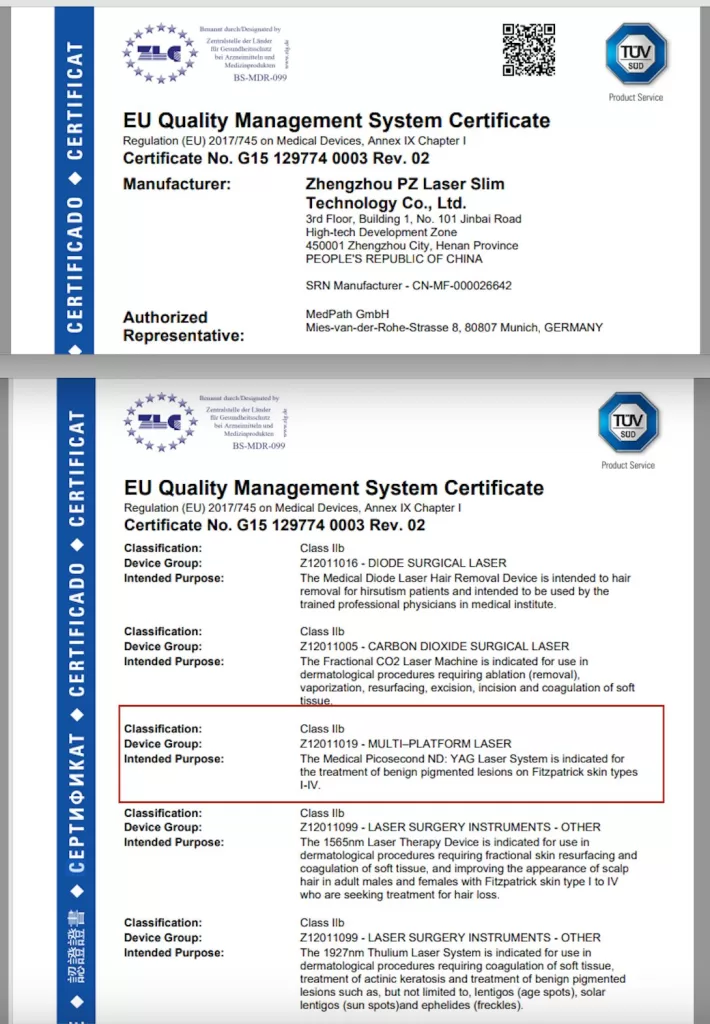
MDR (Medical Device Regulation EU 2017/745) is the strictest medical device regulation in Europe.
Why It Matters:
- Ensures clinical safety and effectiveness
- Requires rigorous testing and documentation
- Provides higher trust for patients and regulators
For Clinics:
Choosing an MDR-certified picosecond laser machine means:
- Lower legal risk
- Higher credibility
- Easier market expansion (especially in EU markets)
👉 In a competitive market, certification is not optional—it’s a competitive advantage.
Applications of Picosecond Laser Machines
A picosecond laser is one of the most versatile devices in aesthetic clinics.
1. Tattoo Removal
- Black and colored tattoos
- Faster clearance
- Fewer sessions
2. Pigmentation Treatment
- Melasma
- Sunspots
- Age spots
3. Acne Scars
- Improves skin texture
- Stimulates collagen
4. Skin Rejuvenation
- Brightening
- Pore reduction
- Fine lines
👉 This versatility directly translates into higher clinic revenue.
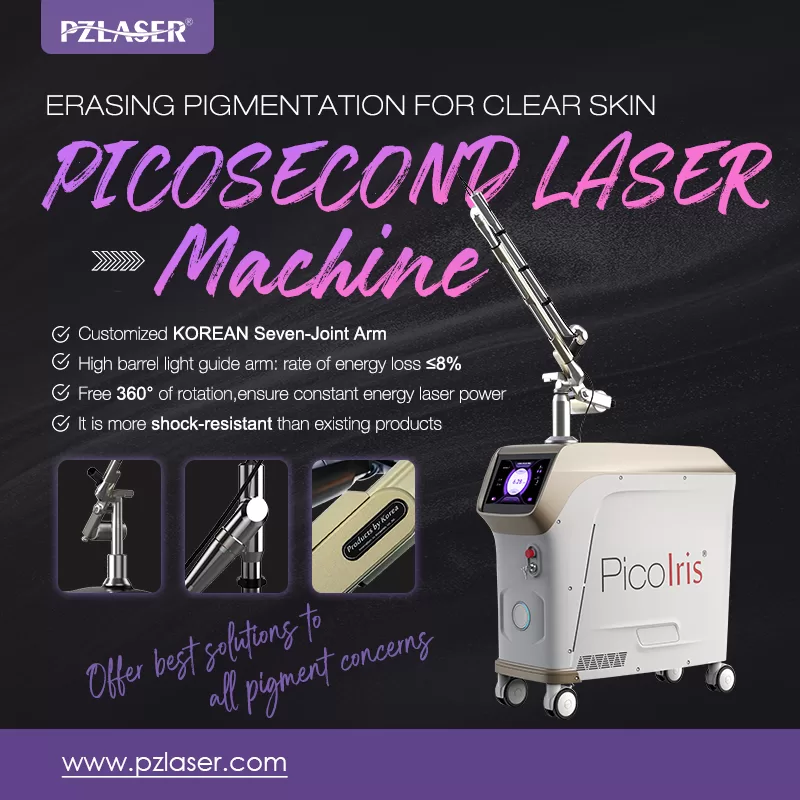
Why Choose PZLASER Picosecond Laser: PicoIris?
When selecting a supplier, reliability matters as much as technology.
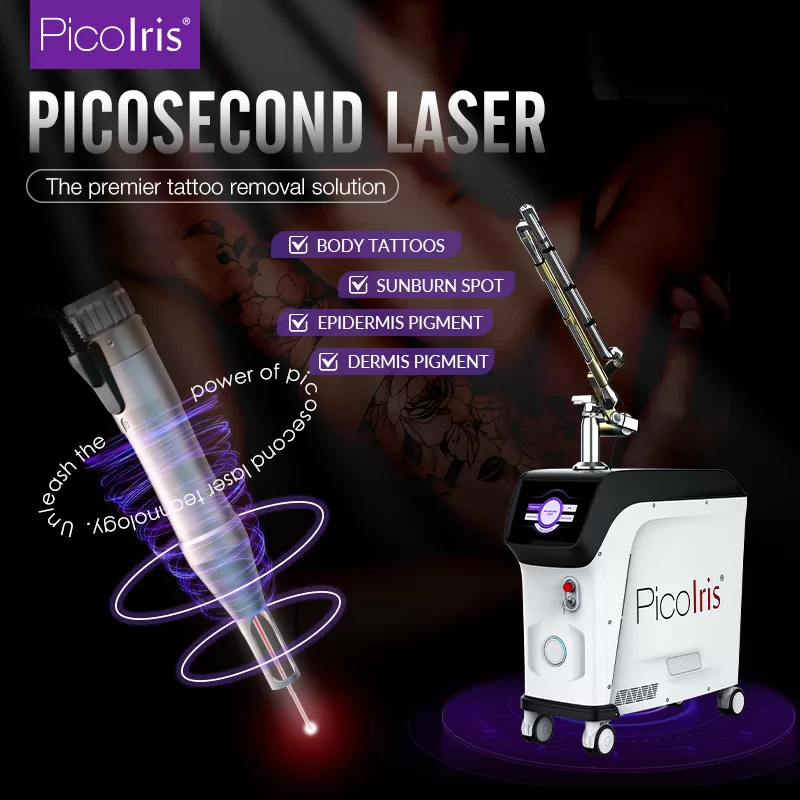
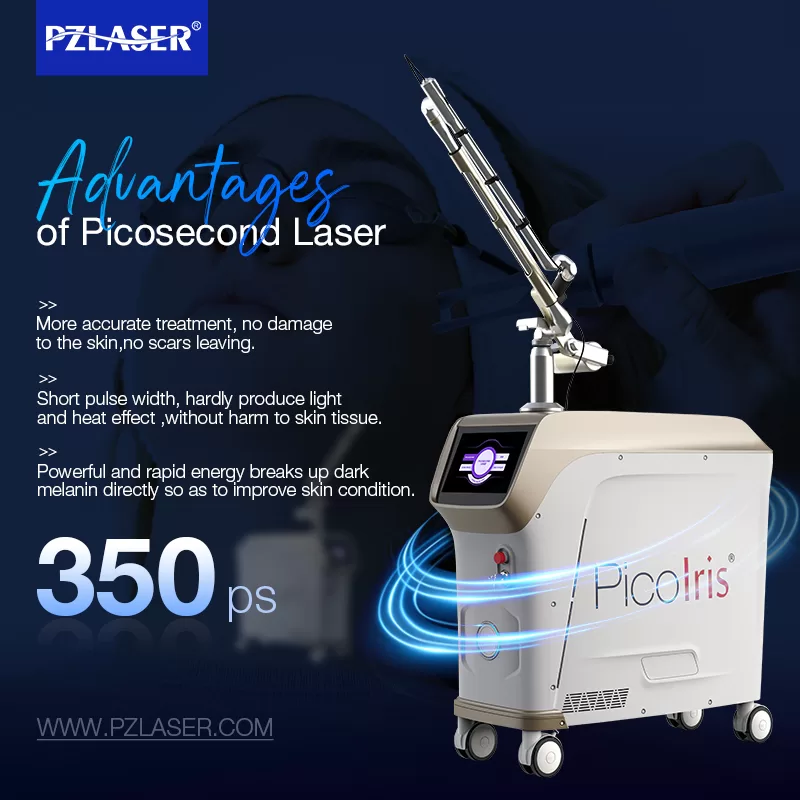
PZLASER PicoIris® Picosecond Laser
Brand Strength:
- 20+ years of R&D experience
- 500+ patents
- Exported to 200+ countries
- OEM/ODM support
Product Highlights:
- 350ps ultra-short pulse
- Multiple wavelengths and modes
- High peak power output
- MDR certification
- Minimal downtime treatments
Business Advantages:
- Faster ROI
- Broader treatment portfolio
- Strong technical support
👉 For distributors and clinics, this means both performance and scalability.
Frequently Asked Questions About Picosecond Laser Machines
The best picosecond laser machine should offer ultra-short pulse duration (such as 350ps), high peak power, multiple wavelengths for different treatments, and reliable medical certifications like MDR or FDA. For clinics, choosing a professional-grade device ensures better results, higher patient satisfaction, and faster return on investment.
The cost of a picosecond laser machine typically ranges from $10,000 to $80,000, depending on factors such as technology, number of wavelengths, brand reputation, and certifications. High-end machines with MDR or FDA approval usually provide better long-term value and ROI.
Yes, picosecond laser machines are generally safe for a wide range of skin types. Because they use ultra-short pulses with minimal heat, they reduce the risk of skin damage and post-inflammatory hyperpigmentation compared to traditional lasers.
Most tattoo removal treatments require 3 to 6 sessions, depending on the tattoo’s size, color, depth, and the patient’s skin type. Picosecond lasers often achieve faster results compared to traditional Q-switched lasers.
The main difference lies in pulse duration and mechanism. Picosecond lasers use ultra-short pulses and a photoacoustic effect to break down pigment, while Q-switched lasers use longer pulses and rely more on heat (photothermal effect). As a result, picosecond lasers are typically more efficient, safer, and require fewer treatment sessions.
For clinic owners, ROI is everything.
1. Premium Pricing: Clients are willing to pay more for: Faster results, Less downtime
2. Fewer Sessions = Higher Turnover: More clients treated per day.
3. Low Consumable Cost: No expensive disposables required.
4. Multi-Treatment Capability: One machine replaces multiple devices.
Conclusion
The picosecond laser machine is no longer a luxury—it is a necessity for modern aesthetic clinics.
With superior technology, versatile applications, and strong profitability, it represents one of the smartest investments in 2026.
However, choosing the right device is crucial.
By focusing on ultra-short pulse technology, multi-wavelength capability, and MDR certification, clinics can ensure better outcomes, higher patient satisfaction, and faster business growth.
💬 Chat on WhatsApp