
Introduction
For clinics and medical spas, one of the most frequent client questions is: “Why do I need multiple Laser Hair Removal Sessions instead of just one treatment?”
Understanding this concept is essential for establishing accurate expectations, optimizing treatment protocols, and improving overall clinical outcomes. The answer lies in the science of hair biology, light-tissue interaction, and device performance. According to the American Academy of Dermatology, laser hair removal works best when the hair is in the anagen (active growth) stage of the cycle, which varies across body areas and individuals.
This blog provides a comprehensive, technical, of why effective hair reduction requires a series of sessions, how the hair growth cycle affects results, and how device choice—especially professional diode laser platforms—determines the efficiency of each treatment plan.
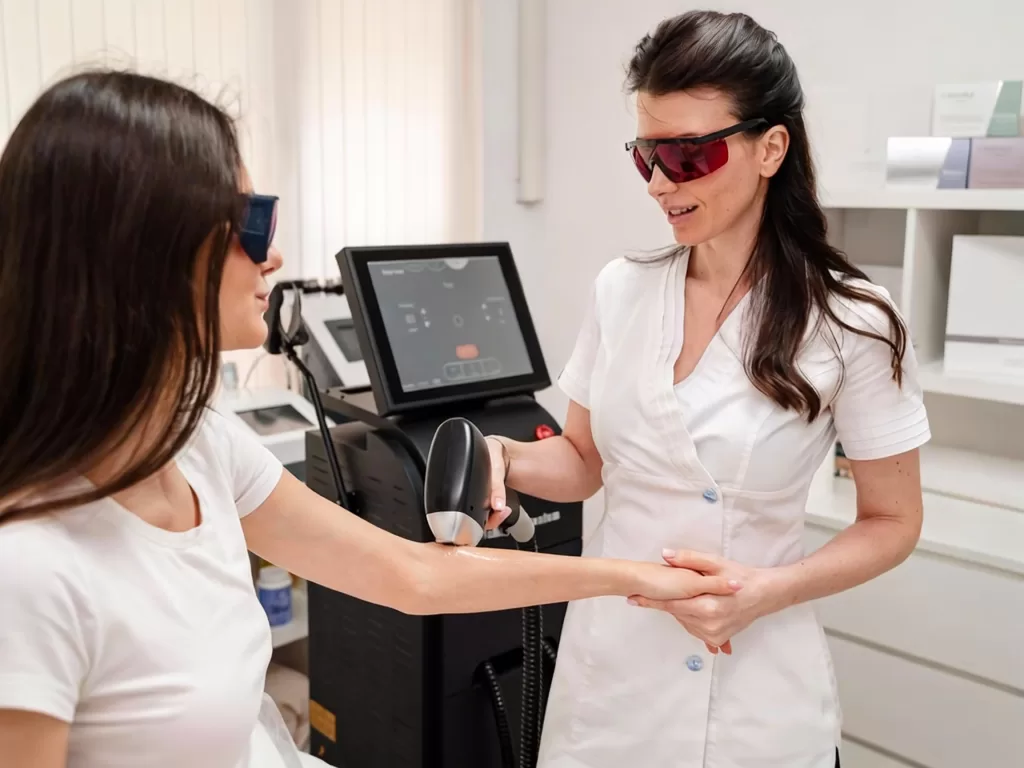
Laser Hair Removal Sessions vs. Hair Growth Cycles
To understand Why Laser Hair Removal Requires Multiple Sessions, it is essential to examine hair biology, follicular depth, laser absorption, and treatment-energy dynamics.
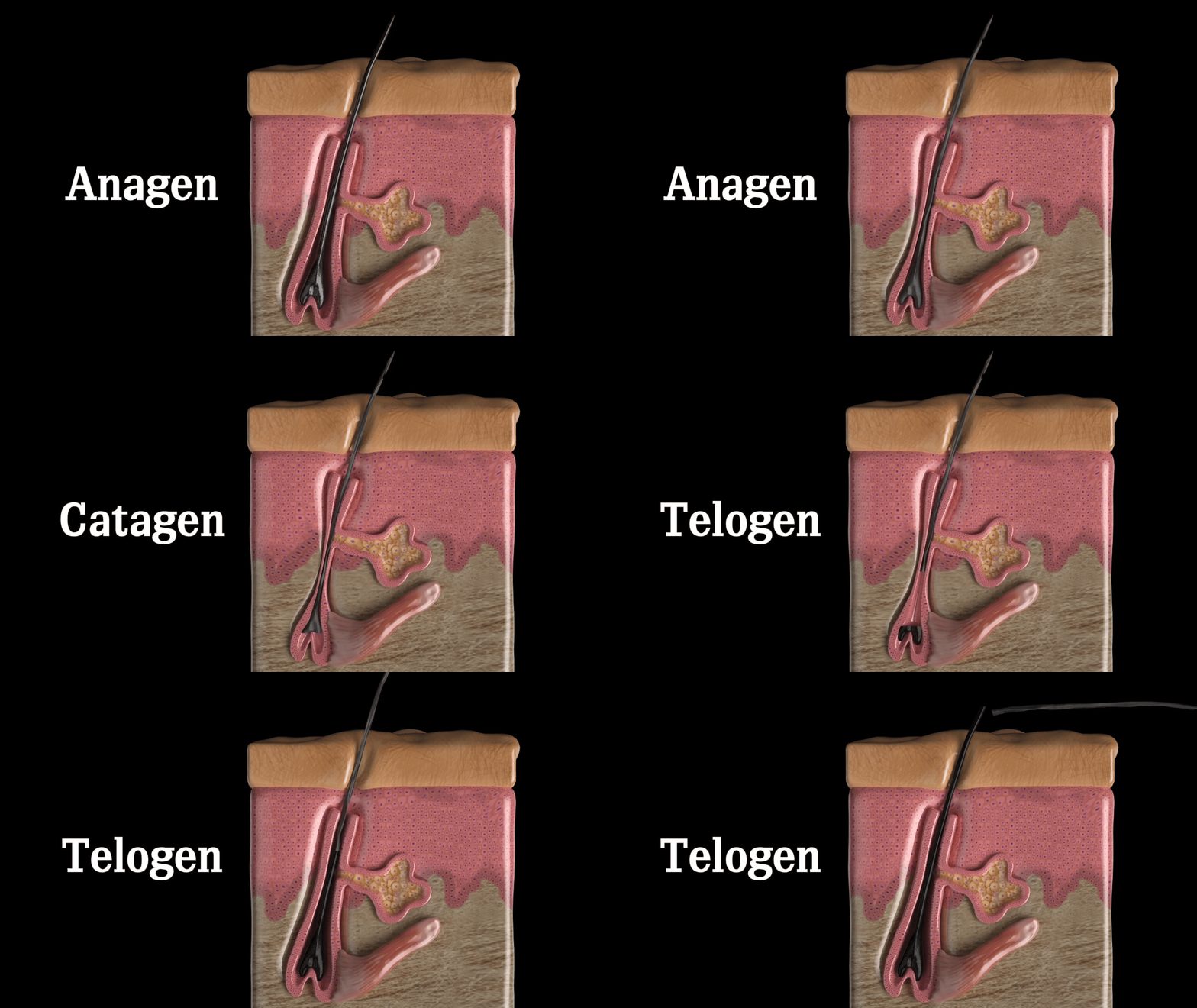
A single body area contains thousands of follicles, each cycling independently. Laser hair removal works effectively only when the hair follicle is in its anagen phase (active growth stage).
The Three Key Hair Growth Stages:
1. Anagen (Active Growth Phase)
- Hair contains maximum melanin, making it highly responsive to laser energy.
- Follicle is attached to the dermal papilla (ideal target).
- Only 10–40% of body hair is in anagen at any given time.
2. Catagen (Transition Phase)
- Hair detaches from the papilla.
- Melanin concentration drops.
- Laser cannot effectively disable these follicles.
3. Telogen (Resting Phase)
- Hair is dormant and detached.
- No laser effect occurs.
Why Only Anagen Hair Responds Best?
Laser hair removal uses the principle of selective photothermolysis, where melanin absorbs laser energy and converts it into heat to disable the follicle.
During anagen:
- Melanin concentration is highest
- The hair is attached deeply to the follicle
- Energy transfer is more effective
Dormant hairs contain insufficient pigment and lie too far from the dermal papilla to be destroyed. Laser-induced thermal injury must reach the bulge region and dermal papilla to ensure permanent reduction. Only anagen follicles are physiologically connected to these structures.
However, only 10–40% of hair in any given area is in the anagen phase at one time, depending on location and individual physiology. This is why practitioners schedule multiple Laser Hair Removal Sessions, making sure each hair enters the correct growth stage for effective treatment.
Factors Affecting the Number of Laser Hair Removal Sessions
For clinics and medical spas, setting realistic treatment expectations requires understanding the variables affecting the required number of Laser Hair Removal Sessions.
1. Treatment Area
Different body regions exhibit unique growth cycles:
- Face: Short cycles → sessions every 2–4 weeks
- Body areas (legs, back, arms): Longer cycles → sessions every 4–6 weeks
- Bikini: Dense, hormone-sensitive → typically more sessions

2. Skin Tone and Fitzpatrick Type
Melanin concentration differs between skin types:
- Types I–III: Faster results, fewer sessions
- Types IV–VI: Require cautious fluence adjustment and more treatments due to higher epidermal melanin
3. Hair Thickness and Density
- Coarse, dark hair responds quickly
- Fine, light, or vellus hair requires more sessions
- Red, grey, or blonde hair may show reduced response due to low melanin
4. Hormonal Influences
Hormone-sensitive regions may require additional sessions: Chin, Neck, Abdomen, Bikini line.
Laser Hair Removal Sessions vs. Laser Technology
Besides the factors mentioned above, the most important factor affecting the number of laser hair removal Sessions is the laser technology itself. Not all “laser hair removal” systems are truly lasers. The device type significantly influences the number of necessary sessions.
1. Diode Laser
- Typically uses 808nm / 810nm, considered the golden standard
- High melanin absorption
- Deep penetration to reach hair bulge/stem cells
- Suitable for all Fitzpatrick skin types
- Lower session count compared with IPL
2. Alexandrite (755nm)
- High melanin absorption
- Excellent for light skin (I–III)
- May be riskier on darker skin
3. Nd:YAG (1064nm)
- Best for dark skin (IV–VI)
- Lower melanin absorption → more sessions needed
4. IPL Systems
- Not a true laser
- Less selective → more treatments needed
- Higher risk of side effects
Professional diode laser systems, deliver superior stability, efficiency, and precision, reducing overall treatment time and increasing results consistency.
How to Schedule Intervals for Laser Hair Removal Sessions?
Laser hair removal sessions must align with the body’s hair cycle timing. Proper intervals ensure that newly entering anagen hairs are available to be targeted.
Incorrect Intervals May Lead to:
- Missed anagen cycles
- Uneven hair reduction
- Slower visible results
- Potential need for additional sessions
Clinics should maintain structured follow-up schedules—often automated through CRM systems—to ensure compliance.
Typical intervals:
- Face: every 2–4 weeks
- Body: every 4–6 weeks
- Back/chest: every 6–8 weeks
How Many Laser Hair Removal Sessions Are Typically Required?
Standard Treatment Expectations by Area:
| Body Area | Typical Sessions | Notes |
|---|---|---|
| Underarms | 6–8 | Fastest response |
| Bikini | 6–10 | Hormonal influence |
| Legs | 6–12 | Large area, strong results |
| Face | 8–12+ | Hormone-sensitive |
| Back | 8–12 | Longer hair cycle |
| Arms | 6–10 | Moderate density |
Clinics should adjust fluence, repetition rate, and mode depending on hair depth and pigmentation.
Why the EosICE Series Enhances the Efficiency of Laser Hair Removal Sessions?
Built with medical-grade engineering, stronger energy stability, and next-generation cooling systems, the EosICE series enables practitioners to deliver more effective results in fewer sessions, reducing operator fatigue and improving patient comfort.
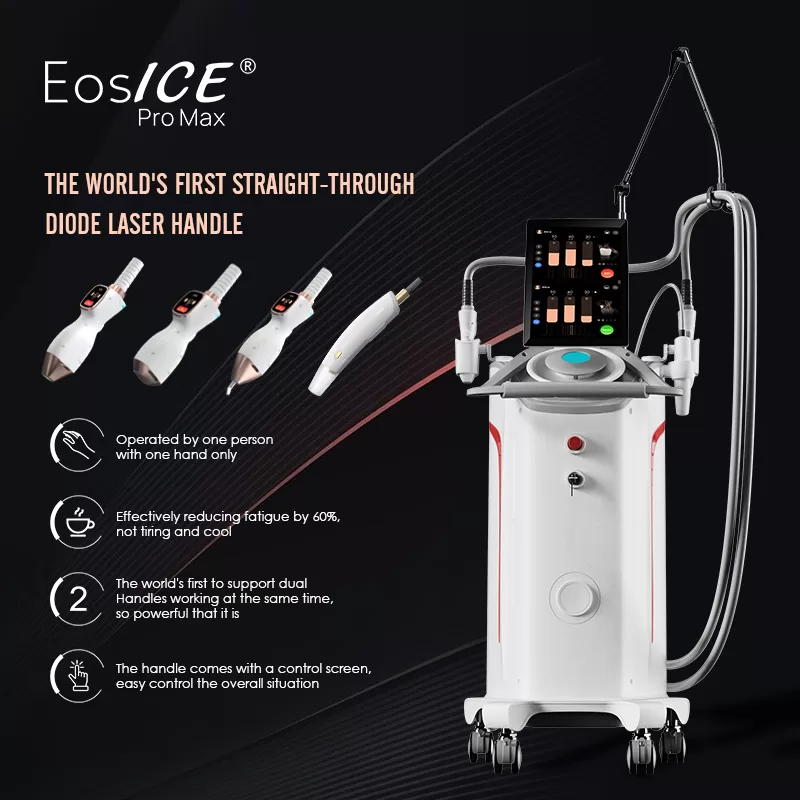
Cutting-Edge Diode Laser Technology for High-Efficiency Hair Reduction
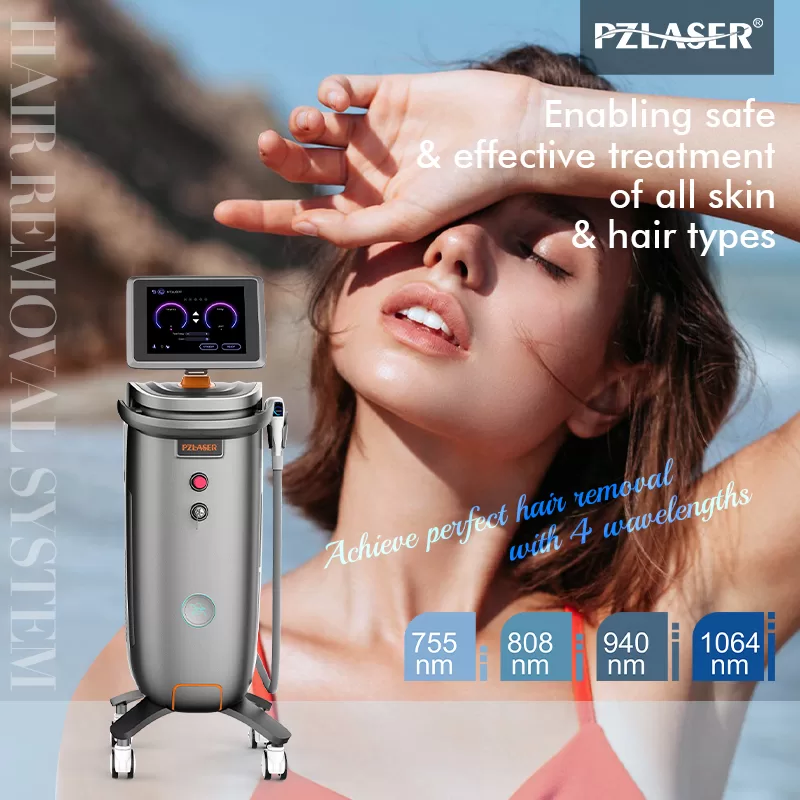
The EosICE Series integrates multiple diode wavelengths—including 755nm, 808nm, and 1064nm—to target both shallow and deeply rooted follicles. This multi-wavelength approach allows practitioners to treat:
- Different skin types across the Fitzpatrick scale
- Multiple hair types (from coarse to medium density)
- All body areas with varying follicle depth
The stable diode energy output ensures uniform penetration, enabling clinics to achieve better follicular destruction with fewer repeated passes.
Ultra-Fast Treatment Speed with Intelligent Energy Delivery
The EosICE platform uses a high-frequency SHR mode combined with intelligent temperature monitoring and pulse control. This allows clinics to:
- Treat larger body areas (legs, back) in significantly shorter time
- Maintain consistent fluence throughout each shot
- Deliver heat gradually to avoid discomfort
The speed and stability of the system enhance treatment throughput—an important factor for clinics offering session-based packages.
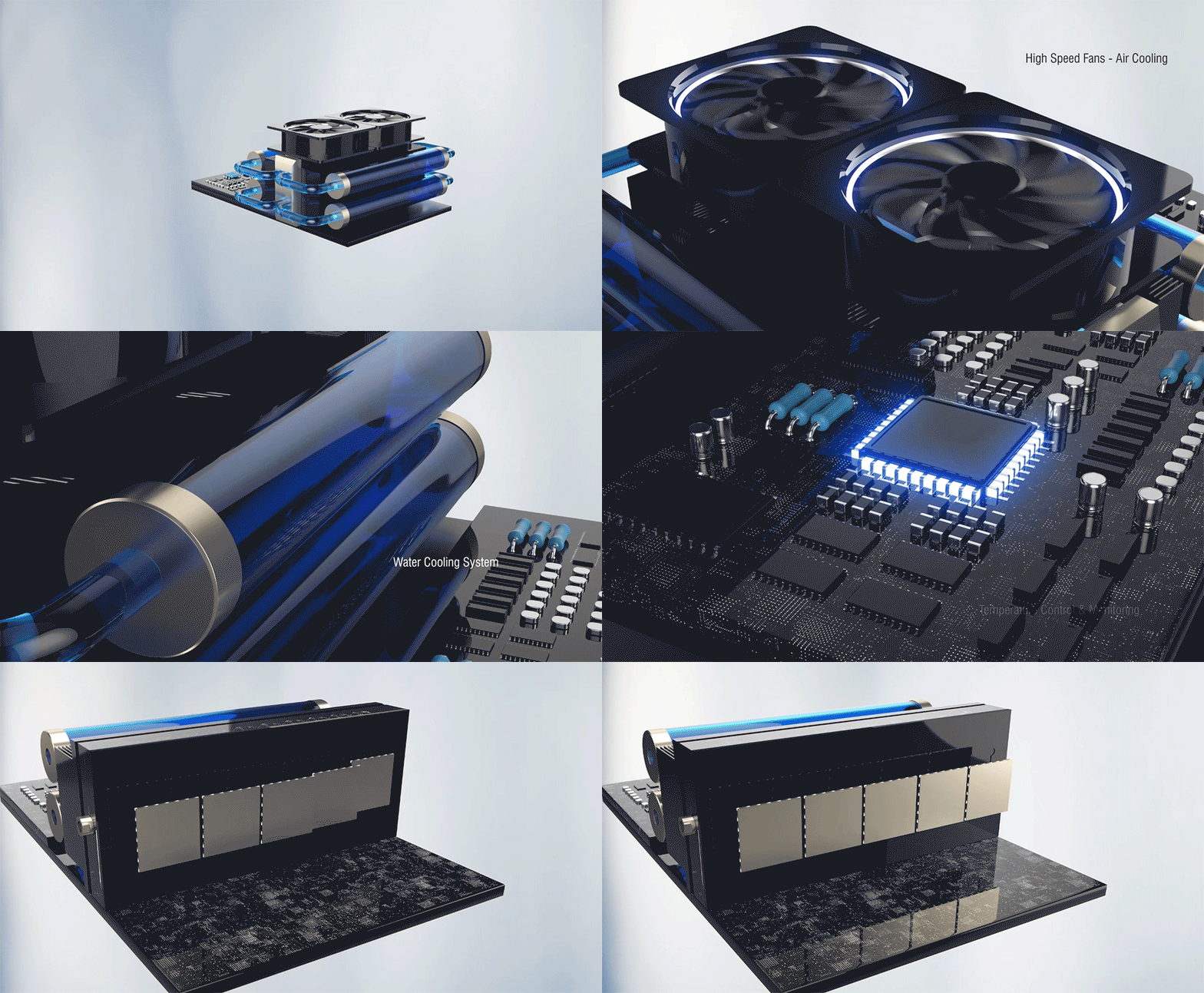
Advanced Ice-Cooling Technology for Maximum Comfort and Safety
The name "EosICE" reflects the system’s outstanding ICE-level sapphire cooling, capable of maintaining near-freezing contact-cooling temperatures even during high-energy operation. Key clinical benefits include:
- Reduced epidermal risk
- Improved client comfort during long SHR passes
- Ability to apply higher fluence safely
- Better tolerance on sensitive areas such as bikini line or underarms
For clinics focused on client satisfaction and word-of-mouth referrals, comfort is a decisive advantage.
Large Spot Size and Ergonomic Handpieces for Faster Workflow
The EosICE Series features a large treatment spot size, reducing the time needed for each session. This is particularly beneficial when treating:
- Large male back areas
- Full legs
- Chest and abdomen
The handpiece design is ergonomic and lightweight, allowing practitioners to maintain precision even during long treatment cycles.
Built for Clinical Reliability and Long-Term Performance
Compared with standard diode laser systems, the EosICE Series is engineered for:
- Long diode lifespan
- Minimal maintenance downtime
- High system stability
- Lower operational cost per session
For B2B users—including med spas, dermatology clinics, and aesthetic centers—the EosICE Series delivers a strong business ROI as well as top-tier clinical performance.
FAQs About Laser Hair Removal Sessions
Why do I still see hair after my first session?
Only anagen-phase hairs are destroyed; the rest will shed gradually over 1–3 weeks.
Is laser hair removal permanent?
It provides permanent hair reduction, not absolute permanent removal.
Why does hair grow back between sessions?
Regrowth often consists of finer, lighter, weaker hairs, or is related to hormonal fluctuations. New hairs enter the anagen phase naturally; that’s why multiple sessions are necessary.
Are fewer sessions needed with a stronger laser?
Advanced systems, such as multi-wavelength diodes, may reduce the number of required sessions, but biology still requires repeated treatments.
Conclusion
Multiple Laser Hair Removal Sessions are essential due to fundamental human hair biology, specifically the asynchronous hair growth cycle. With advancements in diode laser engineering—like the PZLASER EosICE Series—clinics can now deliver faster, safer, and more predictable results.
Optimized wavelengths, intelligent energy delivery, ultra-efficient cooling, and ergonomic design help practitioners treat more follicles in each session and provide a superior client experience.
For professional clinics, adopting high-performance laser systems and educating clients about session-based treatment biology is the key to achieving long-lasting, high-quality hair reduction outcomes.