
Introduction
Many patients are seeking non-surgical anti-aging solutions that deliver significant lifting effects with virtually no downtime. For this reason, HIFU (High-Intensity Focused Ultrasound) technology has become one of the most popular treatments in modern medical aesthetic clinics and centers.
But how exactly does a HIFU machine stimulate collagen production? Why does the improvement continue for months after treatment? And what makes professional HIFU technology different from other skin tightening devices?
In this blog, we'll explore the science behind HIFU collagen stimulation.
What Is a HIFU Machine?
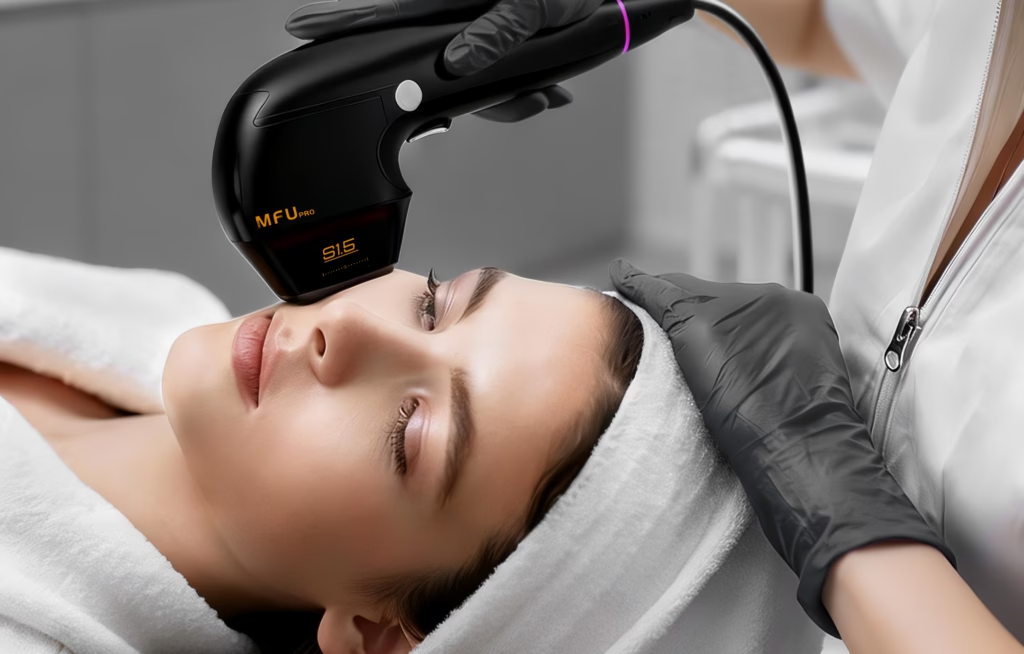
A HIFU machine (High-Intensity Focused Ultrasound) is a professional aesthetic device that uses precisely focused ultrasound energy to tighten the skin, lift facial tissues, and stimulate long-term collagen production.
Unlike lasers or radiofrequency devices that primarily heat the superficial layers of the skin, HIFU concentrates ultrasound energy at specific depths beneath the skin's surface. This allows practitioners to treat deeper support structures while leaving the epidermis completely intact.
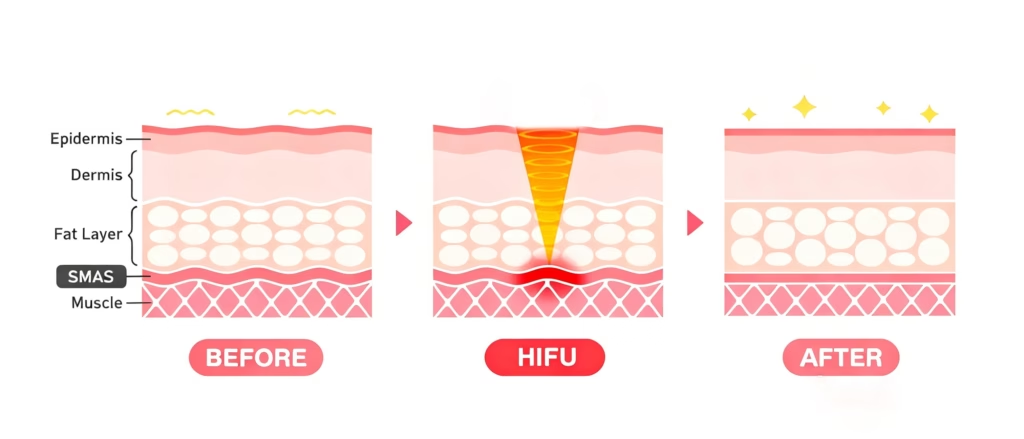
One of the biggest advantages of a professional HIFU machine is its ability to reach the SMAS (Superficial Musculoaponeurotic System)—the same foundational tissue layer addressed during a surgical facelift. Because of this, HIFU is often referred to as a non-surgical facelift treatment.
How Does Focused Ultrasound Work?
Think of a magnifying glass concentrating sunlight onto a single point. While the surrounding area remains relatively cool, the focal point becomes significantly hotter.
A HIFU machine operates on a similar principle.
Instead of light, it uses highly focused ultrasound waves. These waves travel harmlessly through the upper layers of the skin before converging at a precise depth. At that focal point, the temperature rises rapidly—typically reaching around 65–75°C—creating controlled thermal coagulation points within the tissue.
These microscopic treatment zones trigger the body's natural repair response, encouraging fibroblasts to generate fresh collagen and elastin without damaging the skin's surface.
This precise energy delivery is what distinguishes HIFU from many other skin tightening technologies.
Why Is HIFU So Effective for Skin Tightening?
Skin aging affects multiple layers of tissue—not just the surface.
As collagen and elastin fibers gradually weaken over time, the skin loses its structural support. Gravity, repeated facial expressions, and environmental factors further contribute to sagging skin, wrinkles, and reduced elasticity.
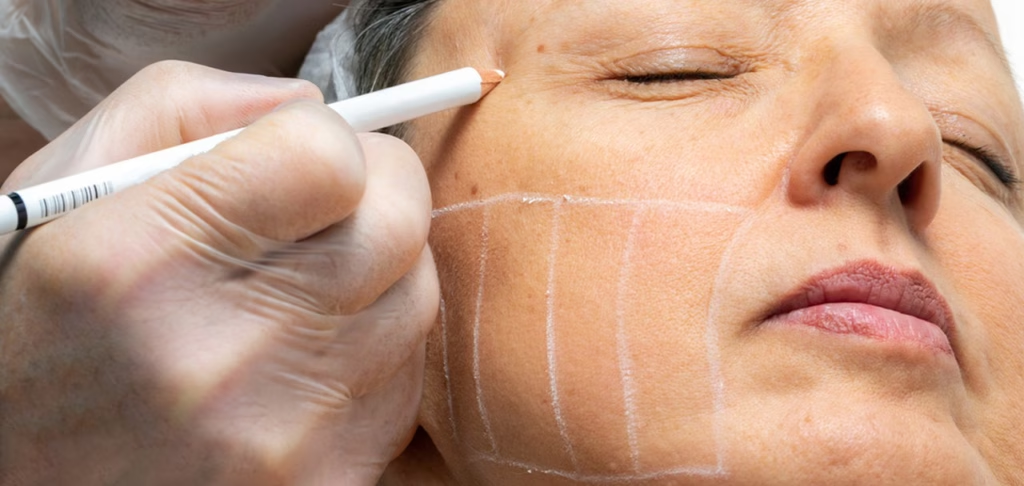
A professional HIFU machine addresses these underlying structural changes by stimulating collagen remodeling deep within the skin. As new collagen forms over the following weeks and months, patients typically notice:
- Firmer skin texture
- Improved jawline definition
- Lifted cheeks
- Reduced appearance of fine lines
- Better neck tightening
- Enhanced facial contours
- More youthful overall appearance
Because collagen regeneration is a gradual biological process, results develop naturally over time rather than appearing immediately, making the improvement look subtle and authentic.
Common facial treatment areas include:
- Forehead
- Eyebrows
- Crow's feet
- Cheeks
- Nasolabial folds
- Jawline
- Chin
- Double chin
- Neck
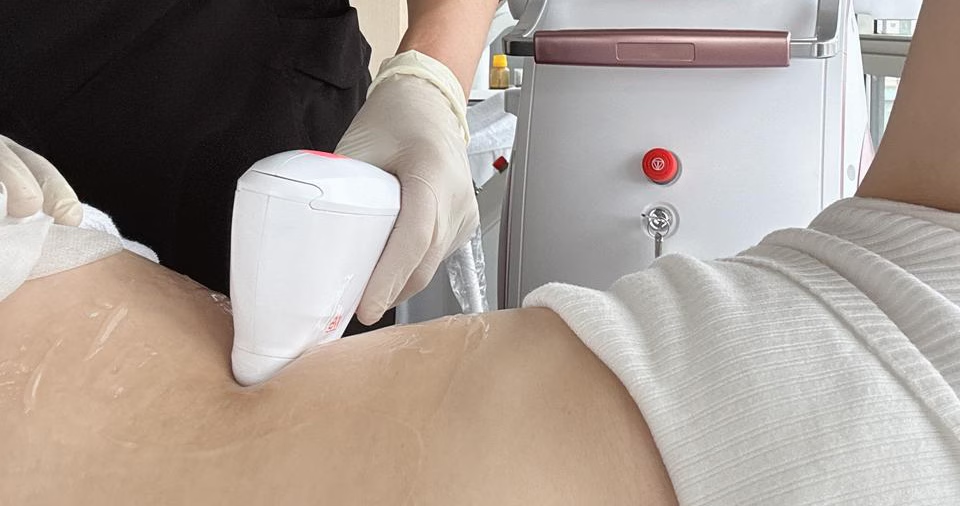
Many advanced HIFU systems also support body treatments for skin tightening in areas such as the abdomen, arms, thighs, and knees.
How Does a HIFU Machine Stimulate Collagen Production?
The ability of a HIFU machine to stimulate collagen production is rooted in the body's own natural healing process.
When focused ultrasound energy reaches specific tissue layers, it creates controlled thermal injury at precise depths. These tiny treatment points are enough to activate the skin's repair mechanism without harming the surrounding tissue or the skin's surface.
The process can be divided into four key stages.
Step 1: Focused Ultrasound Energy Reaches the Target Layer
HIFU machine delivers microfocused ultrasound energy directly to predetermined depths beneath the skin.
Depending on the treatment objective, different cartridges are used to target different tissue layers, such as:
| Treatment Depth | Primary Target | Typical Purpose |
|---|---|---|
| 1.5 mm | Superficial dermis | Fine lines and skin texture |
| 3.0 mm | Deep dermis | Collagen stimulation and skin tightening |
| 4.5 mm | SMAS layer | Facial lifting and contouring |
Ultrasound energy passes safely through the upper layers without damaging the epidermis. The energy is released only at the selected focal point, ensuring highly precise treatment while minimizing downtime.
This targeted delivery is one of the biggest reasons why a professional HIFU machine has become a preferred solution for non-surgical skin tightening.
Step 2: Controlled Thermal Energy Creates Micro-Treatment Zones
Once the ultrasound waves converge at the focal point, they generate temperatures of approximately 65–75°C within a tiny area of tissue.
This heat forms microscopic Thermal Coagulation Points (TCPs).
Although the word "injury" may sound alarming, these micro-injuries are actually beneficial. They are extremely small, highly controlled, and surrounded by healthy tissue, allowing rapid recovery.
The surrounding skin remains intact because:
- The epidermis is not heated.
- Energy is concentrated only at specific depths.
- Adjacent tissues are left largely unaffected.
These Thermal Coagulation Points act as biological "wake-up calls," signaling the body that repair and regeneration are needed.
Step 3: The Body Activates Its Natural Healing Response
Once the treatment is complete, the body immediately begins repairing the treated tissue.
This healing process activates specialized cells called fibroblasts, which produce the skin's structural proteins.
Fibroblasts begin synthesizing:
- Type I collagen, which provides strength and firmness.
- Type III collagen, associated with tissue repair and skin flexibility.
- Elastin, which helps the skin stretch and return to its original shape.
These newly produced proteins gradually replace older, fragmented collagen fibers that have weakened due to aging and environmental damage.
Unlike injectable treatments that provide immediate but temporary volume, a HIFU machine encourages the skin to regenerate its own support network naturally.
This biological process is one of the key reasons HIFU continues to gain popularity as a collagen stimulation treatment.

Step 4: Collagen Remodeling Continues for Months
Collagen production does not happen overnight. Instead, the skin undergoes a gradual remodeling process that can continue for several months after treatment. A typical timeline looks like this:
Immediately After Treatment
- Existing collagen fibers contract due to heat.
- Some patients notice a mild tightening effect.
2–4 Weeks
- Fibroblast activity increases.
- New collagen production begins.
1–3 Months
- Fresh collagen fibers become more organized.
- Skin firmness improves.
- Facial contours appear more defined.
3–6 Months
- Collagen remodeling reaches its peak.
- Improvements in skin elasticity and lifting become more noticeable.
Because this regeneration occurs gradually, the results often appear natural rather than dramatic, which is one reason many patients prefer HIFU over more invasive procedures.
Why Doesn't HIFU Damage the Surface of the Skin?
This is one of the most common questions patients ask.
The answer lies in the unique physics of focused ultrasound technology.
Unlike lasers or some radiofrequency devices that deliver energy from the outside inward, ultrasound waves travel harmlessly through the skin until they reach the selected focal depth.
Only at that precise point is enough energy released to generate heat.
As a result:
- The epidermis remains largely unaffected.
- There are no surgical incisions.
- Recovery time is typically minimal.
- Most patients can resume normal daily activities shortly after treatment.
This "inside-out" approach is one of the defining advantages of a HIFU machine and helps explain why it has become a cornerstone of modern non-surgical facelift treatments.

Who Is an Ideal Candidate for HIFU Treatment?
A HIFU machine is best suited for individuals experiencing mild to moderate skin laxity who want visible lifting without surgery.
Typical candidates include people who:
- Notice sagging around the cheeks or jawline
- Have loose skin on the neck
- Want to reduce fine lines without injections
- Prefer non-invasive treatments with minimal downtime
- Wish to stimulate natural collagen production
The treatment is particularly popular among patients in their 30s, 40s, and 50s, when collagen loss becomes more noticeable, but surgery may not yet be necessary.
Who May Not Be Suitable?
Although HIFU is considered safe for many healthy adults, treatment may not be appropriate for individuals with:
- Severe skin laxity requiring surgical correction
- Active skin infections in the treatment area
- Open wounds or severe acne
- Certain implanted electronic medical devices
- Pregnancy (depending on local clinical guidelines)
A professional consultation is always recommended before treatment to determine the most appropriate approach.
What Factors Affect HIFU Results?
Not all HIFU treatments deliver the same outcomes. The effectiveness of collagen stimulation depends on several important factors.
1. The Quality of the HIFU Machine
Energy accuracy is one of the most critical factors. A professional HIFU machine should deliver focused ultrasound precisely at the intended depth with consistent energy output. Stable energy delivery helps produce uniform thermal coagulation points, leading to more predictable collagen remodeling.
2. Treatment Depth
Different areas of the face require different treatment depths. Professional systems with multiple cartridges allow practitioners to target the superficial dermis, deep dermis, and SMAS layer according to the patient's needs.
3. Practitioner Experience
Even the most advanced equipment relies on proper treatment planning. Experienced practitioners understand facial anatomy, select appropriate cartridges, and adjust treatment parameters to achieve balanced, natural-looking results.
4. Patient Factors
Individual characteristics also influence treatment outcomes, including:
- Age
- Degree of skin laxity
- Lifestyle habits
- Sun exposure
- Smoking status
- Overall skin health
Patients who maintain a healthy lifestyle and consistent skincare routine often enjoy longer-lasting improvements.
How to Choose a Professional HIFU Machine for Your Clinic
For aesthetic clinics and medspas, selecting the right HIFU machine is about more than simply comparing specifications. A reliable platform should combine clinical performance, patient comfort, and operational efficiency.
When evaluating a professional HIFU system, consider the following features:
1. Precise Energy Delivery
Consistent and accurately focused ultrasound energy helps ensure reliable collagen stimulation while minimizing discomfort and unnecessary tissue damage.
2. Multiple Treatment Depths
A versatile HIFU machine should support multiple cartridges to address different facial layers and body areas, allowing practitioners to customize each treatment.
3. Comfortable Treatment Experience
Technologies that improve pulse stability and energy distribution can enhance patient comfort while maintaining treatment effectiveness.
4. Efficient Clinical Workflow
Fast treatment speeds, intuitive software, and ergonomic handpieces help improve productivity in busy clinics and medspas.
5. Versatility
Many clinics prefer systems capable of treating both facial rejuvenation and body skin tightening, maximizing return on investment.
How MFUpro® Maximizes Collagen Stimulation for Both Face and Body
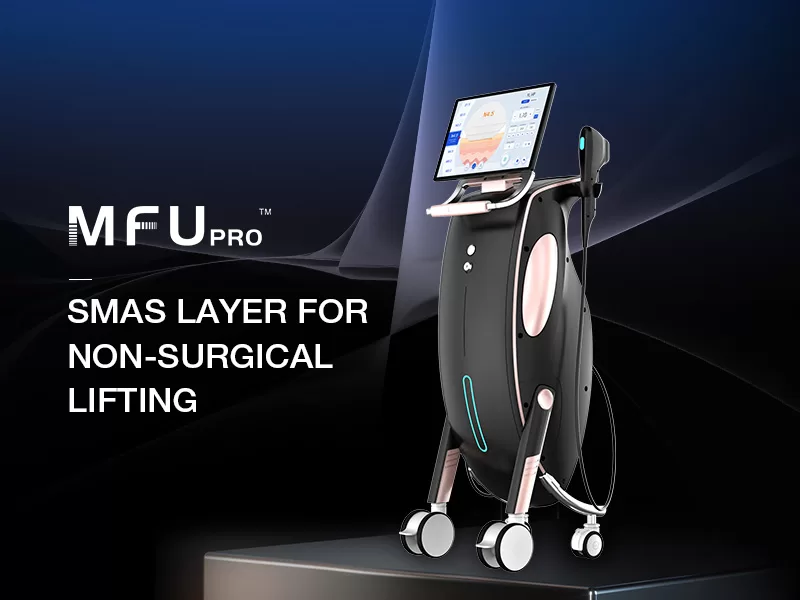
Designed for modern aesthetic practices, MFUpro® combines Micro Focused Ultrasound (MFU) and SD (Synergy Dotting) technologies to provide customized lifting and collagen-stimulating treatments across multiple tissue depths.
The system supports both facial rejuvenation and body skin tightening, allowing practitioners to treat everything from fine lines and facial laxity to double chins, arms, abdomen, thighs, and other body areas using a single platform.
One Platform for Face & Body Rejuvenation
Unlike traditional HIFU systems that primarily focus on facial lifting, MFUpro® is designed as a comprehensive face and body treatment platform.
For facial rejuvenation, different treatment depths help address a wide range of concerns, including:
- Fine lines and wrinkles
- Skin laxity
- Jawline definition
- Double chin
- Neck tightening
- SMAS lifting
- Overall collagen stimulation
Beyond facial applications, MFUpro® also extends ultrasound technology to body contouring and skin tightening. Dedicated cartridges target deeper tissue layers, making the system suitable for areas such as:
- Abdomen
- Upper arms
- Bra-line
- Flanks
- Inner thighs
- Knees
With treatment depths ranging from superficial dermal layers to subcutaneous tissue, practitioners can create personalized protocols for different skin conditions and treatment goals.
New for 2026: Upgraded Micro-Pulsed Technology (MPT)
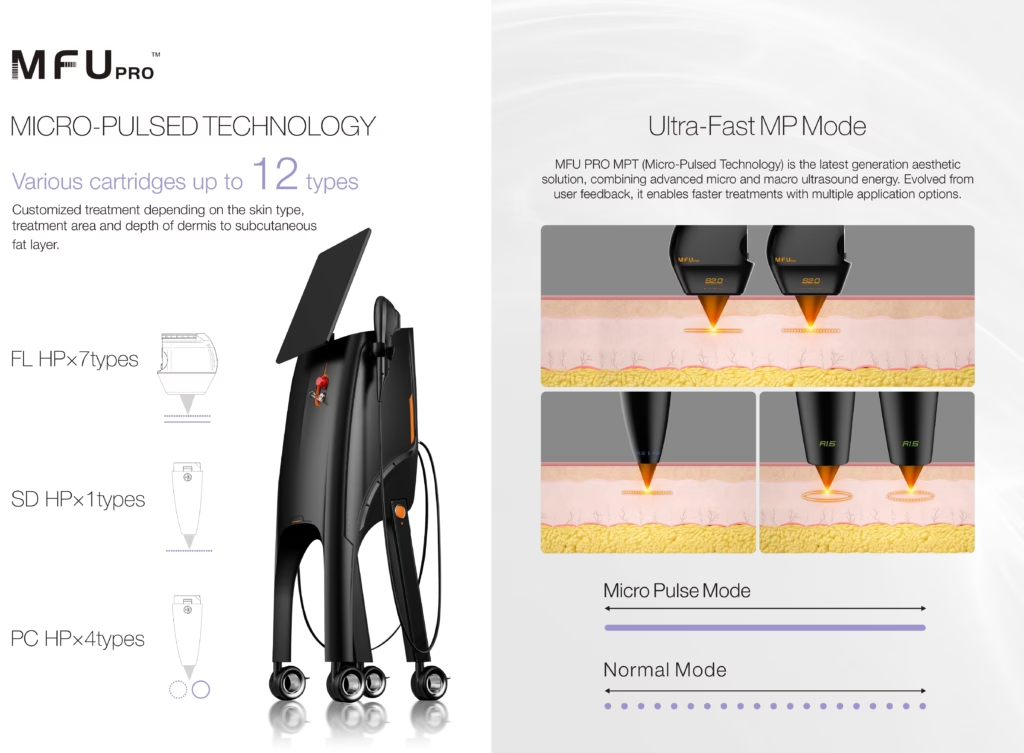
In 2026, MFUpro® introduces its latest upgrade with Micro-Pulsed Technology (MPT), representing the next evolution of ultrasound-based skin tightening.
Rather than conventionally delivering continuous ultrasound energy, the new Ultra-Fast MP Mode combines advanced micro- and macro-ultrasound energy into refined micro-pulses. This upgraded energy delivery provides a smoother treatment experience while improving efficiency across larger treatment areas.
Designed for Modern Medspas and Aesthetic Clinics
For aesthetic businesses, investing in a professional HIFU machine is not only about treatment results—it is also about workflow, versatility, and return on investment.
MFUpro® is designed to help clinics:
- Offer both face and body treatments on one platform
- Expand treatment menus without purchasing multiple devices
- Personalize treatments with multiple cartridge options
- Improve patient comfort with upgraded Micro-Pulsed Technology
- Increase treatment efficiency with faster energy delivery
- Build recurring revenue through collagen-stimulating maintenance treatments
Whether the goal is facial lifting, collagen regeneration, jawline contouring, or body skin tightening, MFUpro® provides a flexible ultrasound platform designed to meet the evolving needs of today's medical aesthetic market.
Frequently Asked Questions About HIFU Machine
Yes. By creating precise thermal coagulation points in the deep dermis and SMAS layer, a HIFU machine activates fibroblasts, encouraging the natural production of new collagen and elastin.
Results typically continue improving for three to six months and may last up to 12 months or longer, depending on individual factors and maintenance treatments.
Both technologies stimulate collagen but through different mechanisms. HIFU targets deeper tissue layers, including the SMAS, while RF microneedling focuses more on the dermis and is often preferred for improving skin texture and acne scars. In many clinics, the two treatments are complementary rather than competing.
HIFU can produce noticeable lifting in patients with mild to moderate skin laxity, but it cannot replicate the dramatic results of surgery for severe sagging.
Many patients begin HIFU treatments in their 30s or early 40s as a preventive approach to collagen loss, although treatment plans should always be individualized.
Many patients achieve good results after a single session, although maintenance treatments are commonly recommended every 12 to 18 months.
Conclusion
This gradual remodeling process explains why HIFU has become one of the most trusted non-surgical skin tightening treatments available today. With minimal downtime, natural-looking results, and long-lasting improvements, it continues to be a valuable solution for both patients seeking facial rejuvenation and clinics looking to expand their anti-aging treatment offerings.
For aesthetic professionals, investing in a professional HIFU machine with precise energy delivery, multiple treatment depths, and reliable clinical performance is essential for achieving consistent outcomes. Platforms such as MFUpro® by PZLASER are designed to support these goals by combining advanced ultrasound technology with flexible treatment options for both facial and body applications.
Whether you're considering HIFU treatment or evaluating equipment for your clinic, understanding how focused ultrasound stimulates collagen production is the first step toward making informed, evidence-based decisions that benefit both practitioners and patients.