
Picosecond laser vs Q-switched laser: what is the difference?
Picosecond lasers use ultra-short picosecond pulses to create photoacoustic shockwaves that shatter pigment into fine particles. In contrast, Q-switched lasers use longer nanosecond pulses that rely on heat energy to break pigment gradually. Picosecond systems generally offer faster results and fewer sessions, while Q-switched lasers remain cost-effective and widely used for standard pigmentation treatments.
Introduction
In modern aesthetic medicine, laser technology plays a critical role in tattoo removal, pigmentation correction, and skin rejuvenation. Among these technologies, Q-switched and picosecond lasers are the two most widely discussed.
However, despite their similar clinical applications, they are fundamentally different in physics, energy delivery, and clinical outcomes.
To understand the difference simply:
A Q-switched laser is like a thermal hammer, breaking pigment with heat and force.
A picosecond laser is like an ultra-high-speed bullet, creating a powerful photomechanical shockwave that shatters pigment into fine, dust-like particles.
However, in real clinical practice, it is not about which technology is “better,” but rather: Which technology is more suitable for the clinic's treatment goals, patient profile, and business model.
Next, in this blog, we will provide you with expert insights covering technical specifications, key advantages, and how to choose the right device.

What Is a Q-Switched Laser?
Q-switched lasers are the first generation of high-energy pigment lasers, widely used for decades.
Mechanism of Action
They deliver energy in nanosecond pulses, causing: Rapid heating of pigment particles → Thermal expansion and fragmentation → Gradual breakdown of ink or melanin
Clinical Applications
- Tattoo removal
- Epidermal pigmentation
- Carbon peel treatments
- Skin toning procedures
Advantages
- Mature and widely available technology
- Lower device cost
- Stable clinical performance record
Limitations
However, due to longer pulse duration:
- More heat diffusion into the surrounding tissue
- Higher risk of inflammation and PIH
- More treatment sessions required
- Less effective on resistant pigments (blue/green/complex inks)

What Is a Picosecond Laser?
Picosecond lasers represent a next-generation advancement in pigment-targeting technology.
Mechanism of Action
Instead of heating, picosecond lasers generate: Ultra-fast energy bursts → Strong photoacoustic shockwaves → Direct pigment fragmentation at the molecular level
Clinical Applications
- Multi-color tattoo removal
- Dermal and epidermal pigmentation
- Melasma management
- Skin rejuvenation via the LIOB effect
- Acne scar remodeling
Advantages
- Faster visible results
- Fewer treatment sessions
- Lower thermal damage
- Safer for darker skin types
- Better performance on stubborn pigments
Limitations
- Higher equipment cost
- More complex engineering system
- Requires optimized parameter control
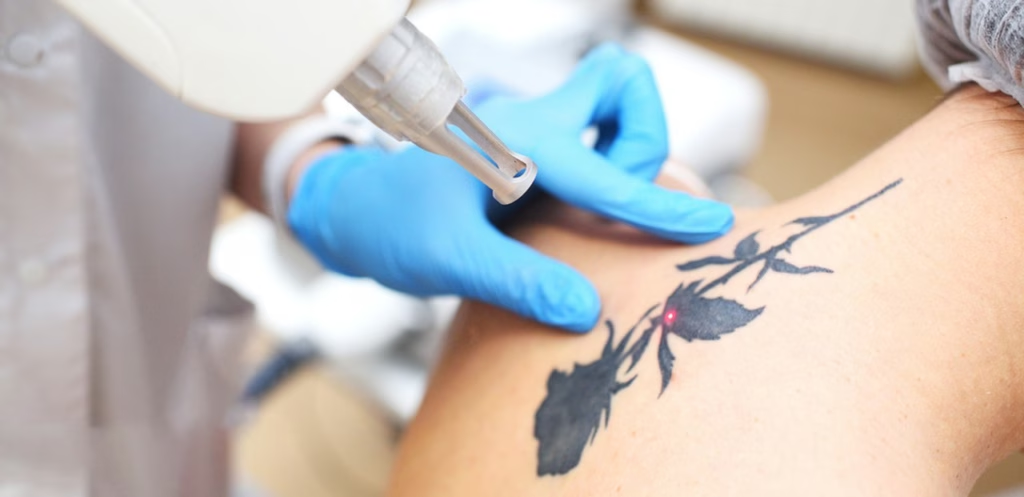
Picosecond Laser vs Q-Switched Laser Core Principle
To truly distinguish the two technologies, we must understand the key parameter in laser physics: pulse duration.
1. Time Scale Difference
- Q-Switched Laser: Nanosecond level (10⁻⁹ seconds)
Typically 5–20 nanoseconds. - Picosecond Laser: Picosecond level (10⁻¹² seconds)
Typically, 300–750 picoseconds in real medical-grade systems.
Conversion:
1 nanosecond = 1000 picoseconds
Picosecond lasers deliver energy in pulses that are 1000 times shorter than traditional Q-switched nanosecond lasers.
2. Mechanism Comparison
| Feature | Q-Switched Laser | Picosecond Laser |
|---|---|---|
| Pulse Duration | Nanoseconds | Picoseconds |
| Mechanism | Thermal effect | Photoacoustic shockwave |
| Pigment Breakdown | Gradual | Instant fragmentation |
| Heat Damage | Higher | Lower |
| Treatment Sessions | More | Fewer |
| Skin Safety | Moderate | Higher |
| Efficiency of Tattoo Ink | Standard | Superior |
| Patient discomfort | Moderate burning sensation | Mild tingling |
How to Identify a True Picosecond Laser?
With the popularity of picosecond technology, many devices on the market are falsely labeled as “picosecond.” Here are five key verification factors:
1. Pulse Width (Golden Standard)
True Picosecond: ≤ 750 ps (e.g., 450 ps, 600 ps)
Fake Picosecond: Measured in nanoseconds or >1000 ps
2. Peak Power (Critical Performance Indicator)
Higher peak power = stronger shockwave effect. Peak Power = Pulse Energy / Pulse Duration
Q-switched (1J / 10ns) ≈ 0.1 GW
Picosecond (1J / 500ps) ≈ 2 GW
👉 True picosecond systems must reach GW-level peak power to generate effective photomechanical disruption.
3. Wavelength Options
Common clinically effective wavelengths:
- 532 nm (red/yellow pigment)
- 755 nm (green/blue pigment)
- 1064 nm (deep dermal pigment)
4. Beam Profile Quality
True picosecond systems often use flat-top beam profiles. Ensures uniform energy distribution and reduces epidermal risk
5. Energy Stability
Stable output ensures: 1. Consistent pigment fragmentation. 2. Lower complication risk

Picosecond Laser vs Q-Switched Laser: Advantages and Clinical Applications
While picosecond laser technology is more advanced, Q-switched lasers still hold a significant place in clinical practice. The choice between them depends on precisely matching the technology to the specific condition being treated.
Advantages of Picosecond Laser
- Highly effective for multicolor tattoo removal (green, blue, red)
- Treats deep dermal pigmentation (e.g., Nevus of Ota, Hori’s nevus)
- Skin rejuvenation via LIOB (Laser-Induced Optical Breakdown) for collagen stimulation
Advantages of Q-Switched Laser
- Ideal for freckles and early-stage pigmentation
- Cost-effective “toning” treatments (e.g., carbon peel / black doll therapy)
- Lower equipment investment, suitable for entry-level clinics
How to Choose the Right System for Your Clinic or Medspa?
The correct choice depends on business positioning and treatment strategy, not just technology level.
Choose Q-Switched if:
- You are building a cost-effective entry service
- Your focus is standard tattoo and pigmentation removal
- You prioritize high patient throughput
Choose Picosecond if:
- You want premium positioning and faster results
- You treat complex pigmentation cases
- You want to expand into skin rejuvenation services
PZLASER PicoIris®: Flexible Configuration Picosecond or Q-Switched
To meet different clinical needs, PZLASER developed PicoIris®. Within the PZLASER portfolio, the PicoIris Picosecond Laser is designed with a flexible configuration concept rather than choosing one of the two.
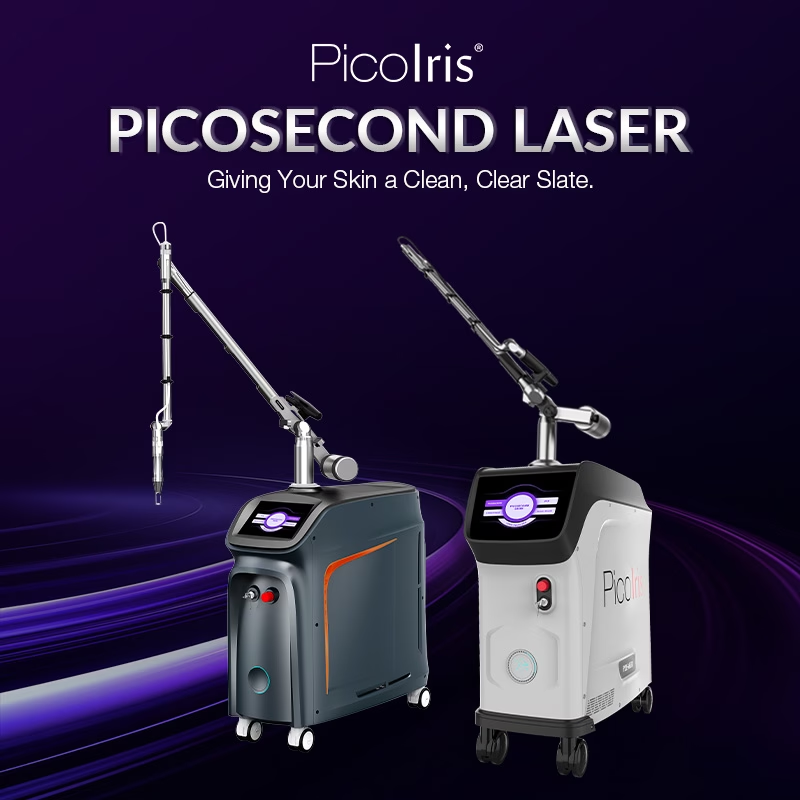
Clinics can configure PicoIris® in two directions:
Picosecond configuration
- Designed for higher-end tattoo removal protocols
- Stronger photoacoustic effect for pigment fragmentation
- Faster clearance in complex or stubborn ink cases
- Positioned for premium aesthetic positioning and higher treatment pricing
Q-switched configuration
- Proven nanosecond technology for general pigmentation and tattoo removal
- Stable performance with broad clinical acceptance
- Cost-efficient setup for high-volume treatments
- Ideal for clinics focusing on accessibility and ROI efficiency
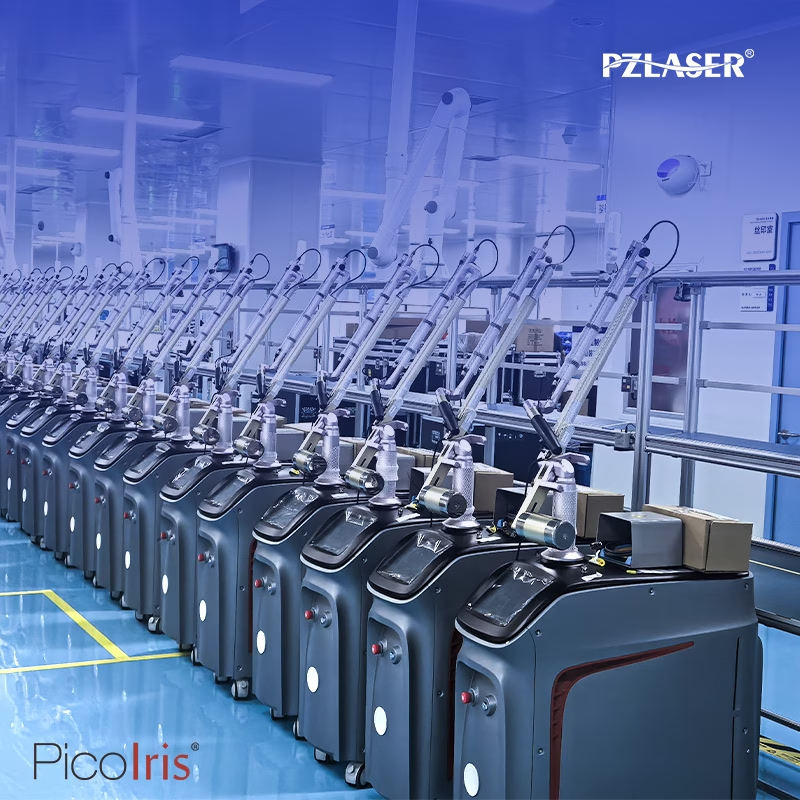
Instead of forcing clinics into a "compromise hybrid system," PicoIris® allows decision-making based on real operational needs:
- No need to overinvest in picosecond if Q-switched meets current demand
- No need to stay limited to Q-switched if upgrading to picosecond is required
- Clear separation of performance pathways for different clinic strategies
This reduces the common industry problem where clinics are unsure whether they are buying:
- a premium picosecond system with unnecessary cost, or
- a basic Q-switched system that may limit future growth
Conclusion
The discussion of picosecond laser vs Q-switched laser should not be framed as a competition.
Instead, it should be understood as:
Two complementary technologies designed for different clinical and business needs.
- Q-switched lasers remain reliable and cost-efficient tools
- Picosecond lasers provide advanced performance and faster outcomes
- Modern clinics often benefit from having access to both
With the PZLASER PicoIris® platform, clinics do not need to choose strictly between them—PZLASER offers both of these technologies for you to choose from.
FAQs About Picosecond Laser vs Q-Switched Laser
The main difference lies in pulse duration and energy delivery mechanism. Picosecond lasers use ultra-short picosecond pulses that create photoacoustic shockwaves to shatter pigment. In contrast, Q-switched lasers use nanosecond pulses that rely on heat energy to gradually break pigment particles.
Neither technology is universally better. Picosecond lasers are generally more efficient for complex pigmentation and tattoo removal, while Q-switched lasers remain effective, stable, and cost-efficient for standard pigment treatments. The best choice depends on clinical needs and treatment goals.
Q-switched lasers are commonly used for:
Basic tattoo removal
Epidermal pigmentation
Carbon peel and toning treatments
Entry-level aesthetic laser services
They are suitable for clinics focusing on high patient volume and cost-effective treatment options.
Picosecond lasers are preferred for:
Multi-color or resistant tattoos
Dermal pigmentation (e.g., melasma)
Skin rejuvenation and collagen stimulation
Clinics aiming for premium treatment positioning
They are ideal for medspas and dermatology clinics offering advanced aesthetic services.
The choice should be based on:
Target patient profile (entry-level vs premium)
Treatment complexity
Budget and ROI strategy
Clinic positioning in the aesthetic market
Many modern clinics benefit from having access to both technologies.
Yes. Many medspas and dermatology clinics combine both systems or use dual-platform solutions. This allows them to treat a wider range of patients and expand service offerings without limiting clinical capability.