
Quick Answer
A reliable diode laser handpiece should provide stable cooling, consistent energy delivery, suitable spot sizes, ergonomic operation, durable internal components, and easy maintenance. Buyers should evaluate the handpiece together with the laser source, cooling system, optical system, and after-sales support rather than judging a diode laser only by its maximum power.
Introduction
When choosing a professional diode laser hair removal machine, buyers often focus on specifications such as wavelength, laser power, pulse frequency, and spot size. However, one important component is sometimes overlooked: the diode laser handpiece.
The handpiece is the part that directly delivers laser energy to the treatment area. Its cooling system, optical components, ergonomics, spot size, and durability can all influence treatment efficiency, operator comfort, and the long-term usability of the device.
For clinics, medspas, and distributors, evaluating the handpiece is therefore an important part of choosing a professional diode laser.
Why Does the Handpiece Matter in a Diode Laser?
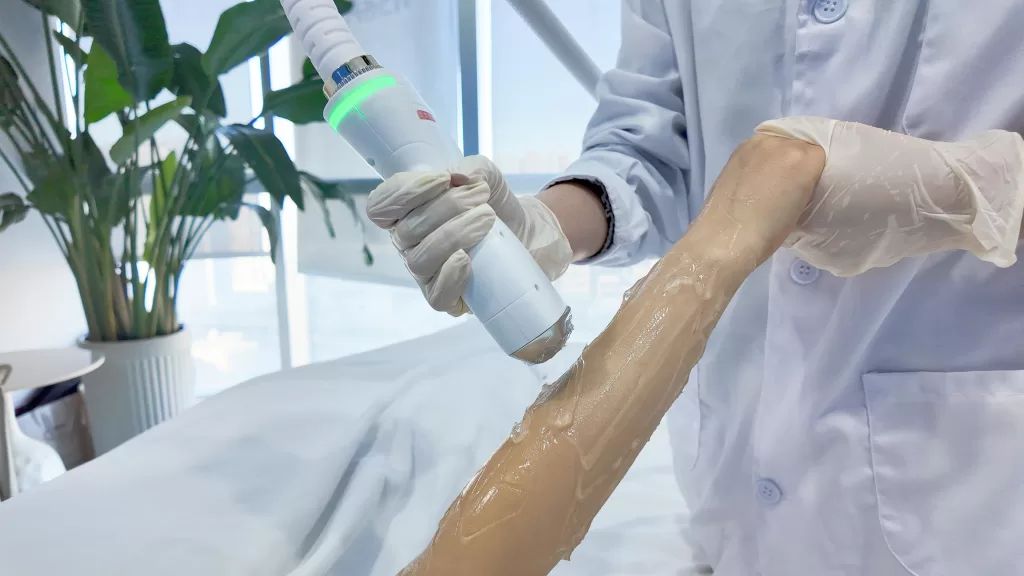
The handpiece is more than an accessory attached to the main console. It is the interface between the laser system, the operator, and the patient's skin.
During a typical working day, a professional diode laser may be used for multiple treatment areas and consecutive sessions. This means the handpiece needs to handle repeated energy delivery while maintaining stable cooling and comfortable operation.
A professional buyer should therefore look beyond the question:
"How powerful is the laser?"
and also consider:
- How stable is the cooling system?
- How evenly is energy delivered?
- Is the handpiece comfortable for long sessions?
- Can the spot size be adapted to different treatment areas?
- How durable is the handpiece?
- Is maintenance straightforward?
- Are replacement parts and technical support available?
A powerful laser is only as practical as the handpiece delivering its energy.
Key Points to Consider When Selecting a Handpiece
1. Cooling System: One of the Most Important Diode Laser
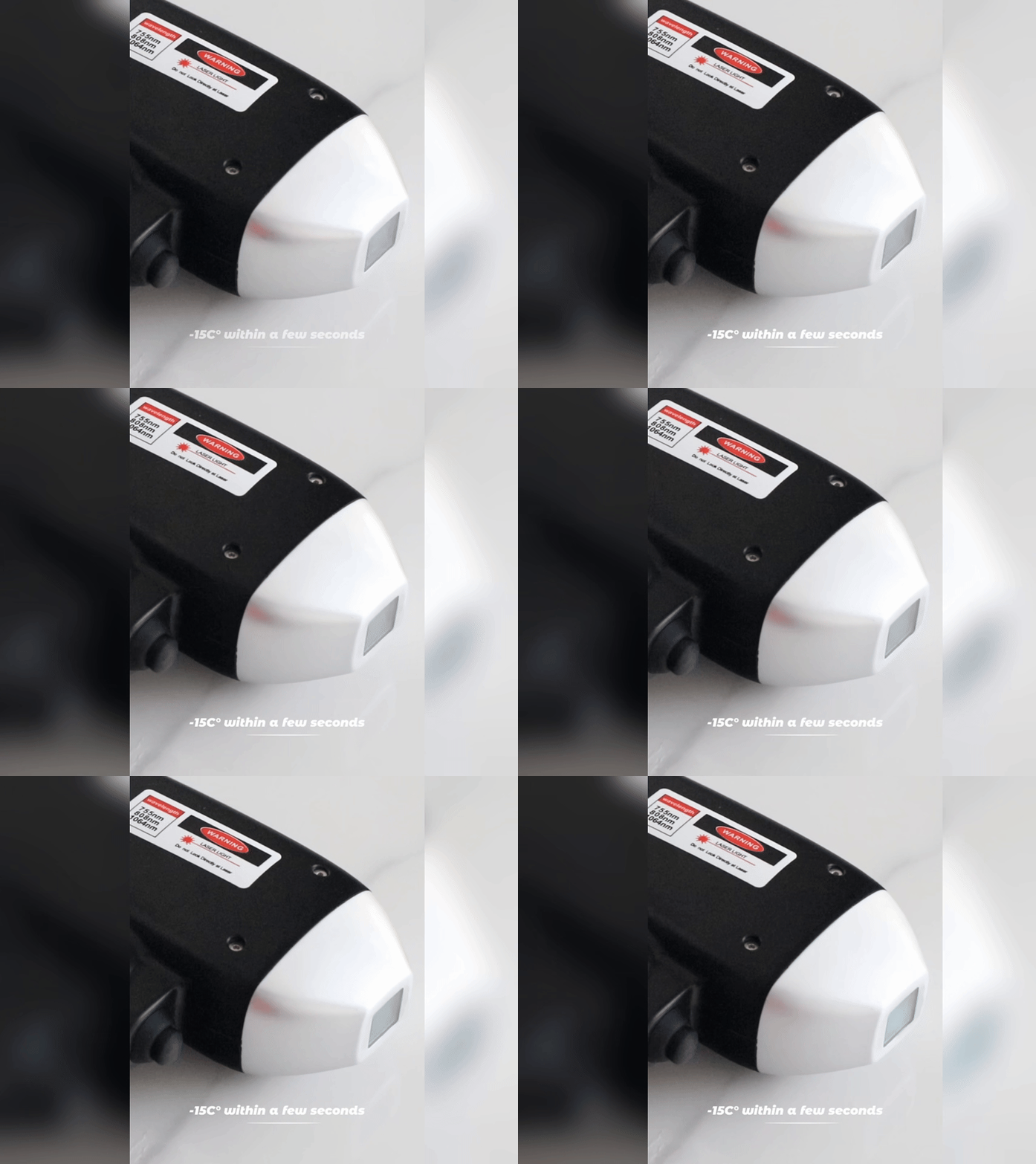
Cooling is one of the first features buyers should examine when choosing a professional diode laser handpiece.
During laser hair removal, heat needs to be carefully managed at the skin-contact surface. A well-designed cooling system can improve treatment comfort while helping the operator maintain a consistent treatment workflow.
However, buyers should look beyond a single temperature number.
A more useful evaluation includes:
- How quickly does the handpiece reach its target temperature?
- How stable is the cooling during repeated treatments?
- How effectively does the cooling surface contact the skin?
- Can the system continue operating efficiently during high treatment volumes?
For a busy clinic, a stable Cooling System matters because cooling performance is not only about comfort during one treatment. It is also about maintaining stable performance across repeated treatments.
2. Spot Size and Treatment Window
Spot size is another important factor when evaluating a diode laser handpiece.
Different treatment areas require different levels of precision and coverage. A large spot can help cover larger body areas efficiently, while a smaller spot can provide better access to small or difficult-to-reach areas.
For this reason, a versatile diode laser handpiece should ideally support different treatment scenarios.
Large Spot Size for Large Treatment Areas such as:
- Legs
- Arms
- Back
- Chest
Smaller treatment windows are useful for areas such as:
- Upper lip
- Chin
- Cheeks
- Bikini area
- Small or difficult-to-reach areas
A flexible spot-size system can be particularly valuable for clinics offering both facial and full-body laser hair removal.
3. Optical Design Matters as Much as Laser Power
Laser power is one of the easiest specifications to compare because it is expressed as a simple number. Optical quality is much harder to evaluate, but it is equally important.
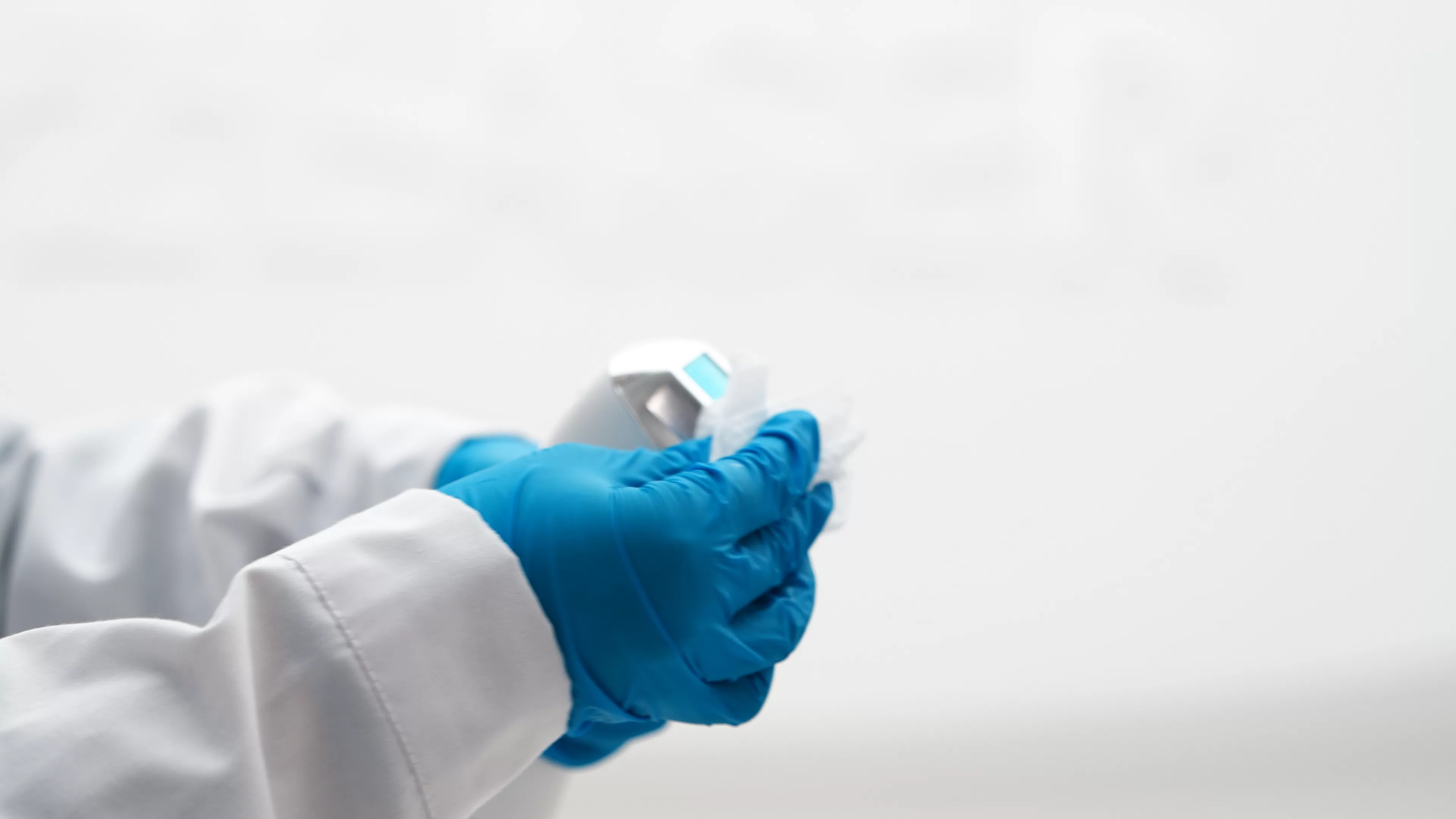
Inside a professional diode laser handpiece, the optical system may include collimating lenses, focusing lenses, light guides, and other components that help control how the laser energy reaches the treatment surface.
The key question for buyers is:
How consistently is the energy distributed across the treatment spot?
An optical system designed for better spot uniformity can help create more consistent energy distribution across the treatment area.
A better purchasing approach is to consider: Laser Source + Optical System + Cooling + Treatment Window as one complete system.
4. Handpiece Weight and Ergonomic Design
Laser hair removal often involves repetitive hand movements. Large body areas may require extended treatment sessions, and operators may use the handpiece continuously throughout the day.
This makes ergonomics more than a cosmetic feature.
A well-designed diode laser handpiece should consider:
- Weight
- Weight distribution
- Grip shape
- Button placement
- Cable flexibility
- Ease of movement
- Access to treatment information
For clinics, this can translate into a simple but important benefit: The easier the handpiece is to operate, the easier it is to maintain an efficient treatment workflow.
5. Direct Controls Can Improve Treatment Workflow
Traditional laser systems often require operators to look back at the main console to check or adjust settings.
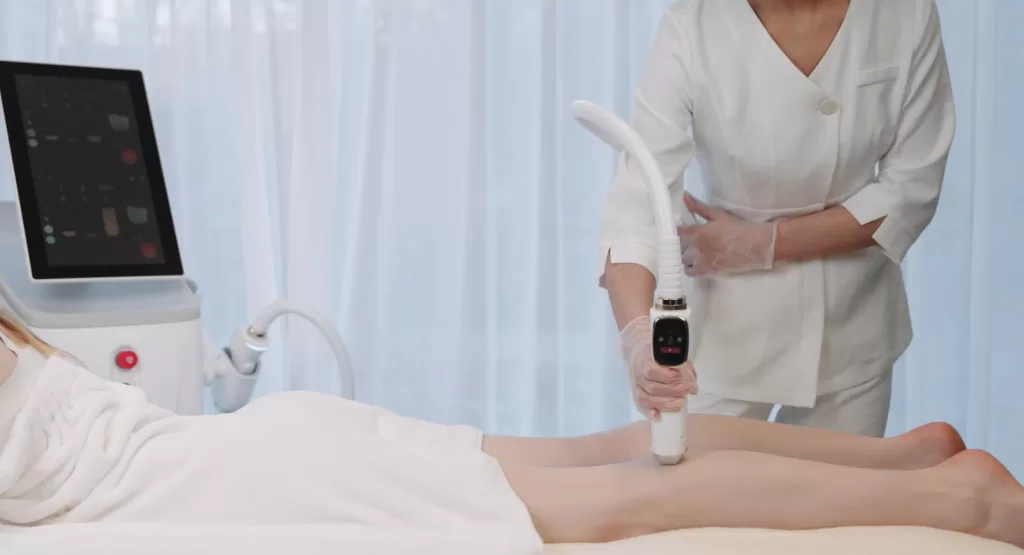
A handpiece with integrated controls can simplify this process.
For a clinic, small workflow improvements can become significant when the device is used dozens of times every day.
This is an important difference between evaluating equipment as a machine specification and evaluating it as a daily clinical tool.
6. Easy Maintenance and Serviceability
Maintenance is particularly important for clinics and distributors purchasing professional aesthetic equipment.
Before purchasing a diode laser handpiece, buyers should ask about:
- Spare parts availability
- Handpiece replacement
- Cooling system maintenance
- Technical support
- Warranty coverage
- Service response
- Training and installation support
For distributors, serviceability can be even more important because after-sales support directly affects customer satisfaction and long-term business relationships.
How to Compare Diode Laser Handpieces Before Buying
Instead of comparing only laser power or price, professional buyers can use the following checklist:
| Feature | What Buyers Should Check |
|---|---|
| Cooling | Sapphire, TEC/Peltier, water cooling, and overall cooling stability |
| Spot Size | Suitable sizes for different treatment areas |
| Optical System | Beam consistency and energy distribution |
| Ergonomics | Weight, balance and grip design |
| Control | Ease of adjusting or monitoring treatment parameters |
| Lifespan | Expected working life and shot count |
| Maintenance | Ease of servicing and replacement |
| Spare Parts | Availability and cost |
| Warranty | Coverage and technical support |
| Workflow | Single or dual-handpiece operation |
This approach provides a more complete picture of the value of a professional diode laser system.
EosICE® Diode Laser: Designed Around the Treatment Handpiece
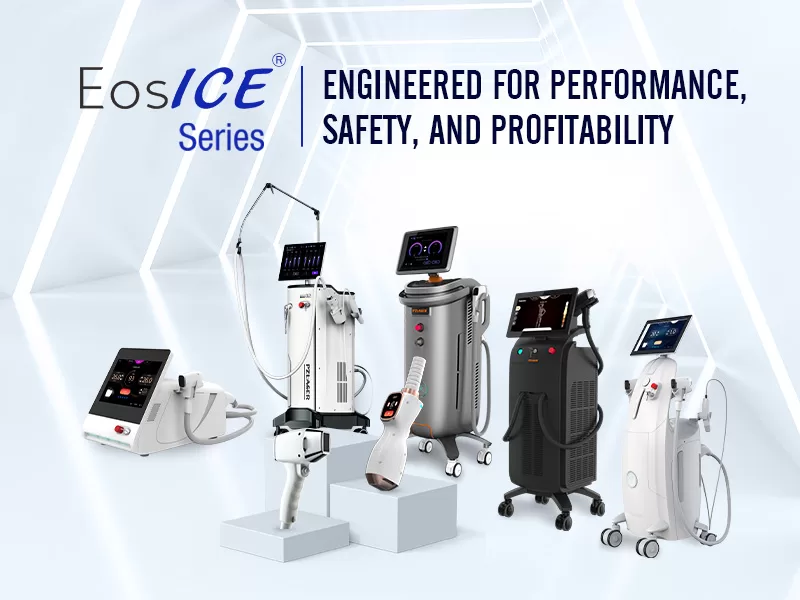
The EosICE series from PZLASER takes a handpiece-centered approach to diode laser hair removal, combining cooling, optical components, interchangeable spot sizes, ergonomic operation, and professional workflow features.
For clinics and distributors, the advantage is not simply one individual specification. It is how these features work together in a professional treatment environment.
One Handpiece, Three Spot Sizes
One of the notable features of the upgraded EosICE handpiece is its interchangeable spot-size design.
The handpiece supports three spot sizes:
- 15 × 15 mm
- 15 × 30 mm
- 8 × 8 mm
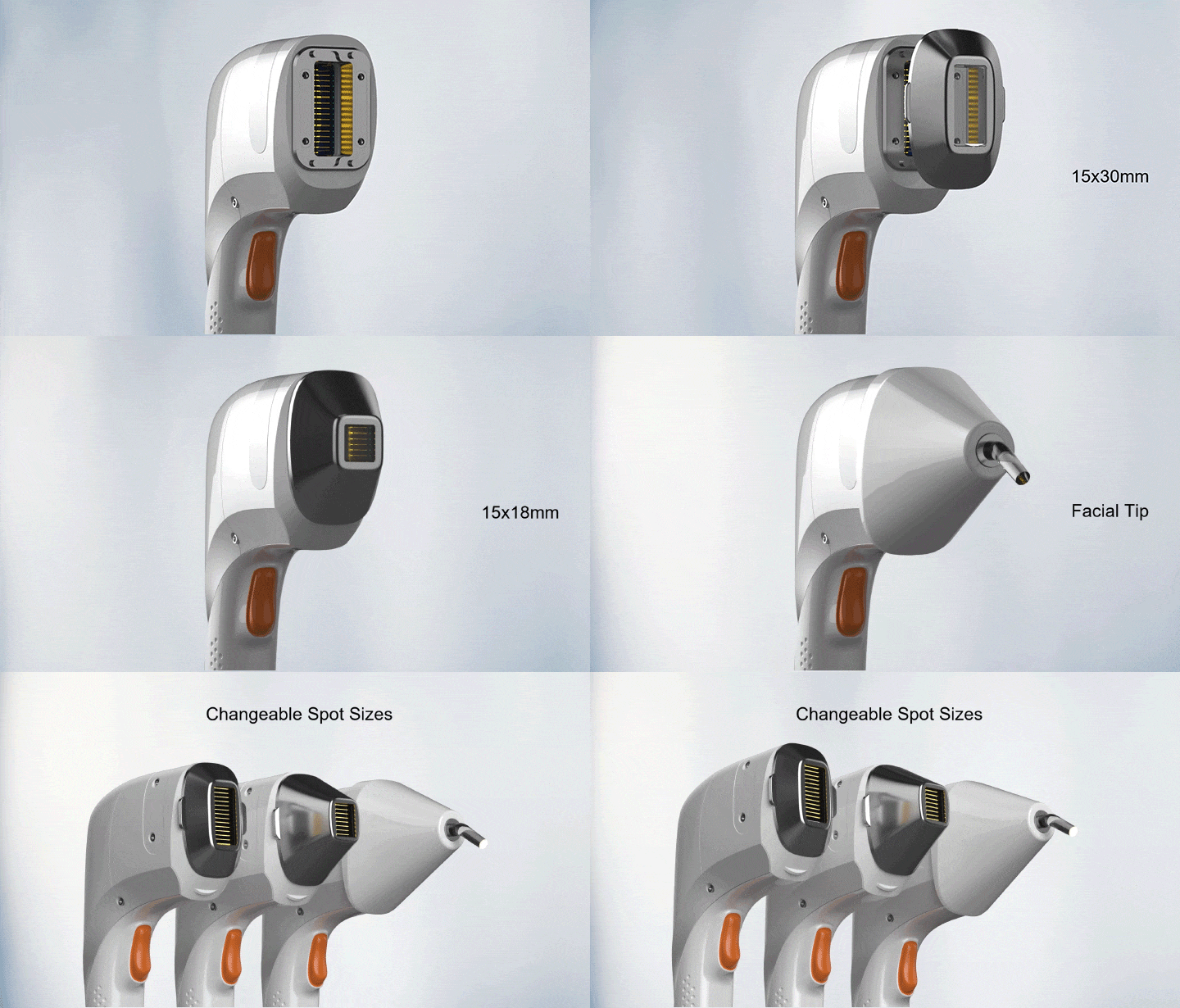
The spot sizes can be switched using a magnetic attachment design, allowing one handpiece to adapt to different treatment scenarios.
For clinics, this can reduce the need to switch between multiple applicators during different treatment areas and can simplify the treatment workflow.
Upgraded Optical Components for More Consistent Spot Performance
The upgraded EosICE handpiece incorporates optical components from Germany's LIMO, including collimating and focusing components as well as a LIMO-developed light-guide crystal.
From a purchasing perspective, the important point is not simply the component's brand. Buyers should consider how the optical system contributes to consistent energy distribution and stable treatment performance.
360° Peltier Cooling for the Treatment Interface
The upgraded EosICE handpiece also incorporates 360° Peltier cooling.
The upgraded system reaches a cooling temperature of -18°C within two minutes and increases skin-contact cooling performance.
For buyers, this highlights an important distinction: cooling performance should be evaluated not only by the lowest temperature but also by how quickly the handpiece cools and how consistently it maintains cooling during repeated treatments.
Different EosICE configurations may use different cooling architectures and specifications, so buyers should confirm the exact cooling configuration of the model they are purchasing.
Ergonomic Design for One-Hand Operation
The upgraded EosICE handpiece is designed for one-person, one-hand operation and includes an integrated control screen.
The upgraded handle is designed to reduce operator fatigue by 60%, while the integrated screen provides direct access to controls.
For practitioners, this design focuses on an important aspect of daily clinical operation: reducing unnecessary movement between the handpiece and the main console.
For clinics performing multiple treatments per day, ergonomics can therefore be an important factor alongside laser power and treatment speed.
Dual-Handpiece Operation for Higher Treatment Capacity
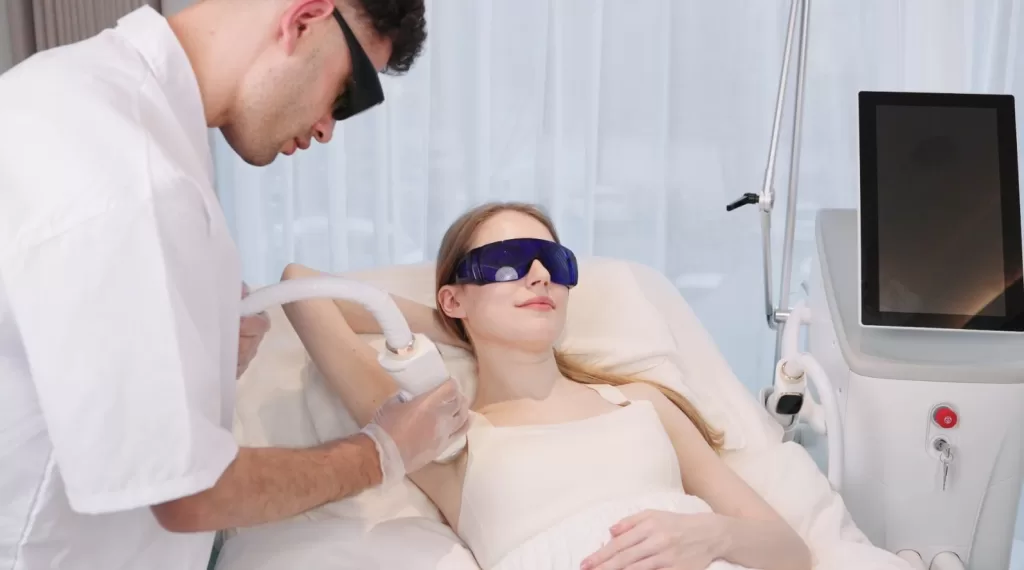
Another feature highlighted in the EosICE product material is support for two handpieces working simultaneously.
For busy clinics and professional distributors, this feature can be considered from a workflow perspective.
Potential advantages include:
- Supporting multiple operators
- Reducing equipment downtime between treatments
- Increasing treatment capacity
- Making better use of the device during busy periods
Conclusion
When comparing professional diode laser hair removal machines, it is easy to focus on the main console and headline specifications.
However, the handpiece can have a direct impact on the practical use of the system.
A complete purchasing evaluation should therefore consider:
Laser Source → Cooling → Optical System → Spot Size → Handpiece → Maintenance → After-Sales Support
The EosICE series demonstrates how these elements can be integrated into a professional diode laser platform.
For clinics, the focus is on treatment workflow and operator experience. For distributors, the EosICE Series also provides multiple technical features that can be evaluated when positioning a professional diode laser in different markets.
Frequently Asked Questions About Diode Laser Handpiece
A diode laser handpiece is the applicator that delivers laser energy to the treatment area. It typically contains optical components, a treatment window, cooling components, and control interfaces.
A good diode laser handpiece should combine stable cooling, reliable optical performance, appropriate spot sizes, ergonomic handling, durable construction, and practical maintenance support.
A lighter and well-balanced handpiece can reduce operator fatigue during repeated treatments and may make long treatment sessions more comfortable for practitioners.
Distributors should evaluate more than the purchase price. Cooling technology, optical components, handpiece lifespan, spare parts, maintenance, warranty, technical support, and workflow features should all be considered.