
Quick Answer
A picosecond laser is an aesthetic laser system that delivers energy in ultra-short pulses measured in picoseconds, or one trillionth of a second. Its extremely short pulse duration allows laser energy to interact with targeted pigments through a strong photomechanical effect, making picosecond laser technology widely used for pigmentation concerns, tattoo removal, and selected skin rejuvenation treatments.
When choosing a professional picosecond laser machine, buyers should evaluate more than maximum energy. Key factors include wavelength options, pulse duration, energy stability, spot size, optical components, handpiece design, cooling, parameter control, certifications, and manufacturer support.

What Is a Picosecond Laser?
A picosecond laser is a laser system that delivers energy in pulses lasting only a few picoseconds. One picosecond equals one trillionth of a second.
Compared with longer-pulse laser technologies, picosecond laser systems are designed to deliver energy extremely quickly. This short pulse duration can create a strong photomechanical or photoacoustic effect, helping break targeted pigment into smaller particles while limiting unnecessary thermal exposure to surrounding tissue.
Because of this operating principle, picosecond lasers have become an important technology in modern aesthetic and dermatology applications.
How Does a Picosecond Laser Work?
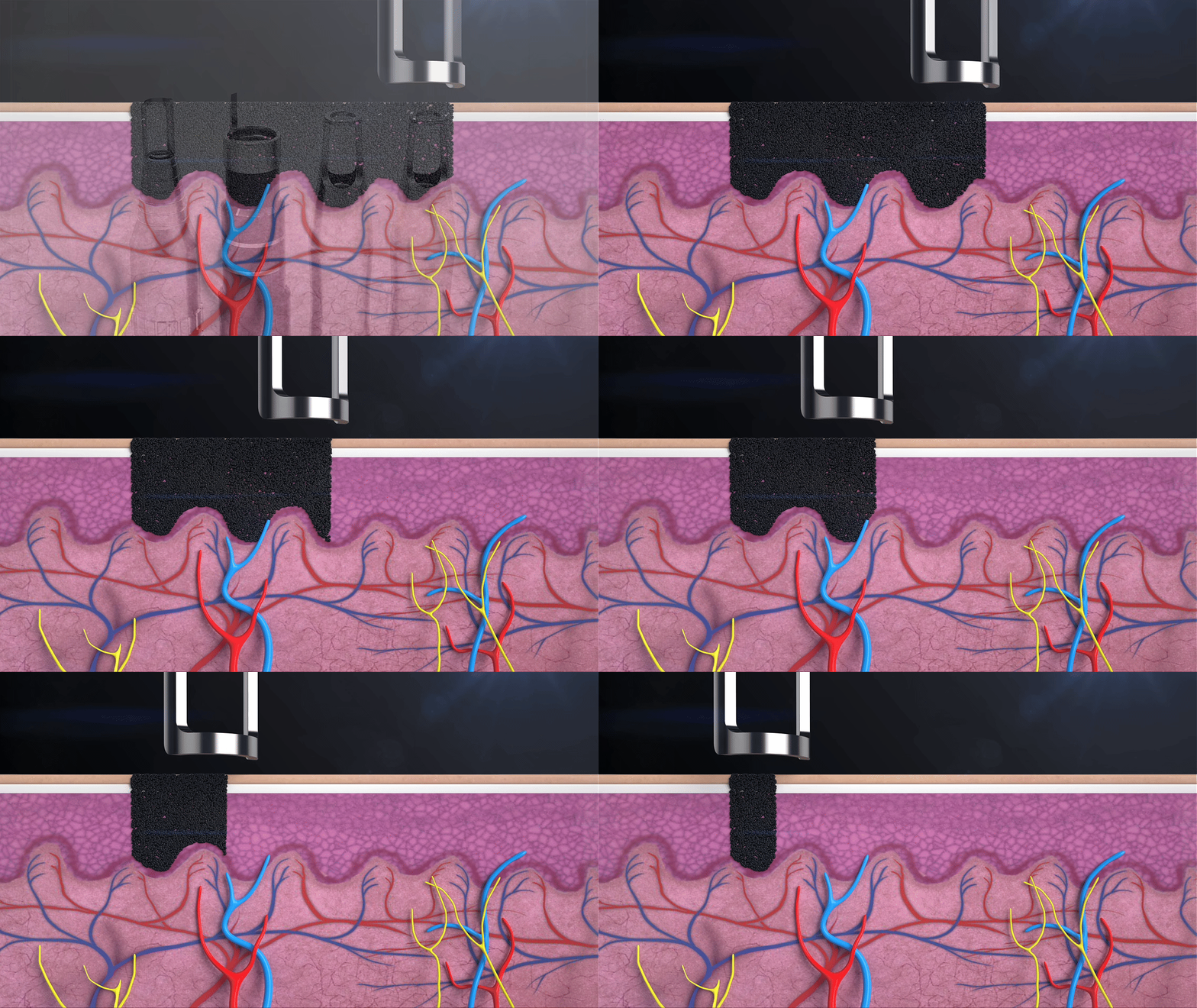
During treatment, a picosecond laser delivers concentrated energy to a targeted area. Depending on the selected wavelength and treatment parameters, specific pigments can absorb the laser energy. The extremely short pulse creates a rapid photomechanical effect that can fragment the target pigment into smaller particles.
The treatment process can generally be understood in three stages:
1. Laser Energy Is Delivered
The picosecond laser emits an ultra-short pulse at a selected wavelength and energy level.
2. Targeted Pigment Absorbs the Energy
Pigments and other chromophore targets respond according to their optical characteristics. Choosing an appropriate wavelength helps optimize energy delivery for the intended application.
3. Pigment Is Fragmented
The rapid energy delivery creates a photomechanical effect that can break pigment into smaller particles. The body can then gradually clear these fragmented particles through its natural processes.
This mechanism is one reason picosecond laser technology is widely explored for pigmentation and tattoo-related applications.
Key Benefits of Picosecond Laser Technology
Ultra-Short Pulse Duration
Picosecond pulses are significantly shorter than nanosecond pulses. This allows energy to be delivered over an extremely short period, supporting a strong photomechanical interaction with targeted pigments.
Precise Energy Delivery
A professional picosecond laser machine should provide stable and controllable energy delivery. Consistent output is important for maintaining predictable operating conditions across treatments.
Versatile Wavelength Options
Different wavelengths interact differently with target pigments. A system with multiple wavelength options can provide greater flexibility for pigmentation and tattoo-related applications.
Adjustable Treatment Parameters
Parameter flexibility allows practitioners to adapt treatment settings according to the application, treatment area, skin characteristics, and target pigment.
Broad Application Range
Depending on its configuration, a picosecond laser can support several aesthetic applications rather than being limited to a single treatment category.
What Should You Look for in a Picosecond Laser Machine?
Choosing a professional picosecond laser machine requires a technical and commercial evaluation. Maximum power or energy alone should not be the deciding factor.
Wavelength Options
Different pigments respond differently to different wavelengths, so clinics should consider whether the machine configuration matches their primary treatment applications.
For a multi-purpose aesthetic clinic, multiple wavelength options may provide greater treatment flexibility.
Pulse Duration and Energy Stability
A picosecond laser is defined by its ultra-short pulse technology, but pulse duration alone does not determine overall system quality.
Buyers should also consider:
- Energy consistency
- Pulse-to-pulse stability
- Parameter accuracy
- Long-term operating stability
A stable laser source can be more valuable in daily clinical operation than a specification that only highlights maximum output.
Spot Size and Optical System
Spot size affects treatment coverage and operating flexibility.
Larger spot sizes can improve efficiency when treating relatively large areas, while smaller spot sizes may be useful for more targeted treatment.
Handpiece Design
The handpiece is the part of the system that directly interacts with the operator's workflow.
A well-designed picosecond laser handpiece should be:
- Comfortable to hold
- Easy to operate
- Ergonomically balanced
- Suitable for repeated clinical use
- Easy to maintain
User Interface and Parameter Control
A professional aesthetic laser should provide clear and intuitive parameter adjustment.
A well-designed interface can help operators efficiently control settings such as energy, frequency, and spot size according to the treatment protocol and device configuration.
Certifications and Manufacturer Support
For international buyers, certifications can be an important part of the purchasing decision.
In addition to regulatory documentation, buyers should evaluate:
- Manufacturer experience
- Product quality control
- Warranty coverage
- Technical training
- Spare parts availability
- After-sales service
- Export experience
For distributors, clinics, and medical aesthetic businesses, long-term supplier support can be just as important as the machine's specifications.
Recommended PZLASER Medical Picosecond PicoIris® System
The PZLASER Medical Picosecond PicoIris® combines ultra-short-pulse technology, dual-wavelength capability, flexible spot-size adjustment, and multiple treatment handpieces into a professional medical aesthetic laser platform.
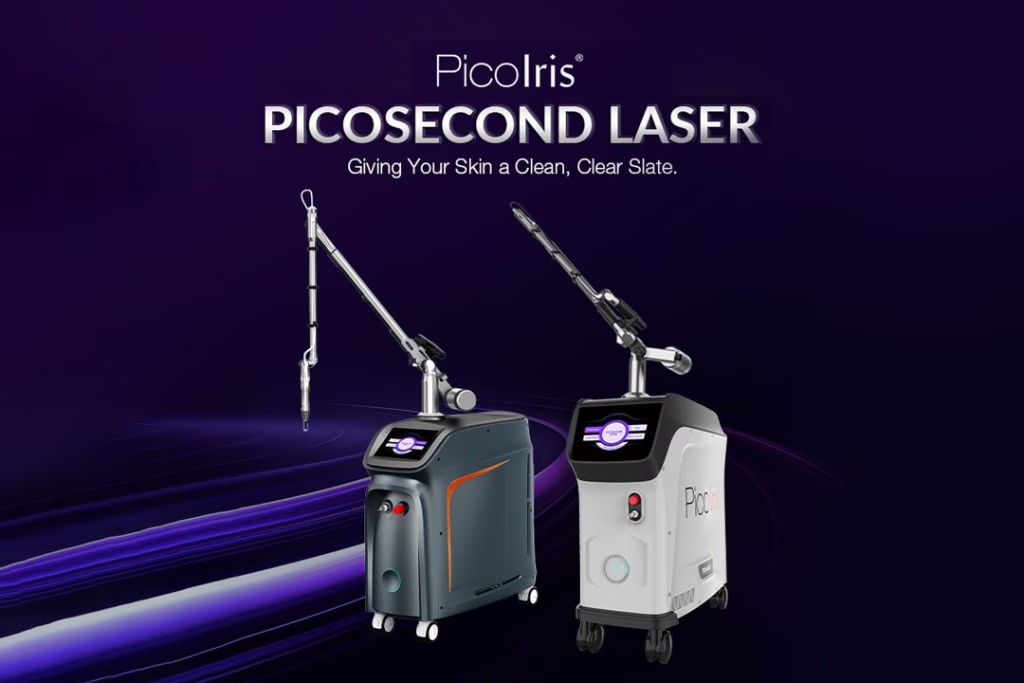
365 ps Ultra-Short Pulse Technology
PicoIris® system is a 365 ps ± 20 ps pulse width, enabling ultra-short laser energy delivery for a strong photomechanical effect. This picosecond technology is designed to deliver energy rapidly and precisely, making the system suitable for professional aesthetic laser applications.
Dual Wavelengths
The PicoIris® integrates 1064 nm and 532 nm wavelengths, providing greater flexibility for different treatment requirements.
The dual-wavelength configuration makes the system a versatile platform for pigmentation, tattoo-related applications, and other aesthetic treatments supported by the selected wavelength and treatment protocol.
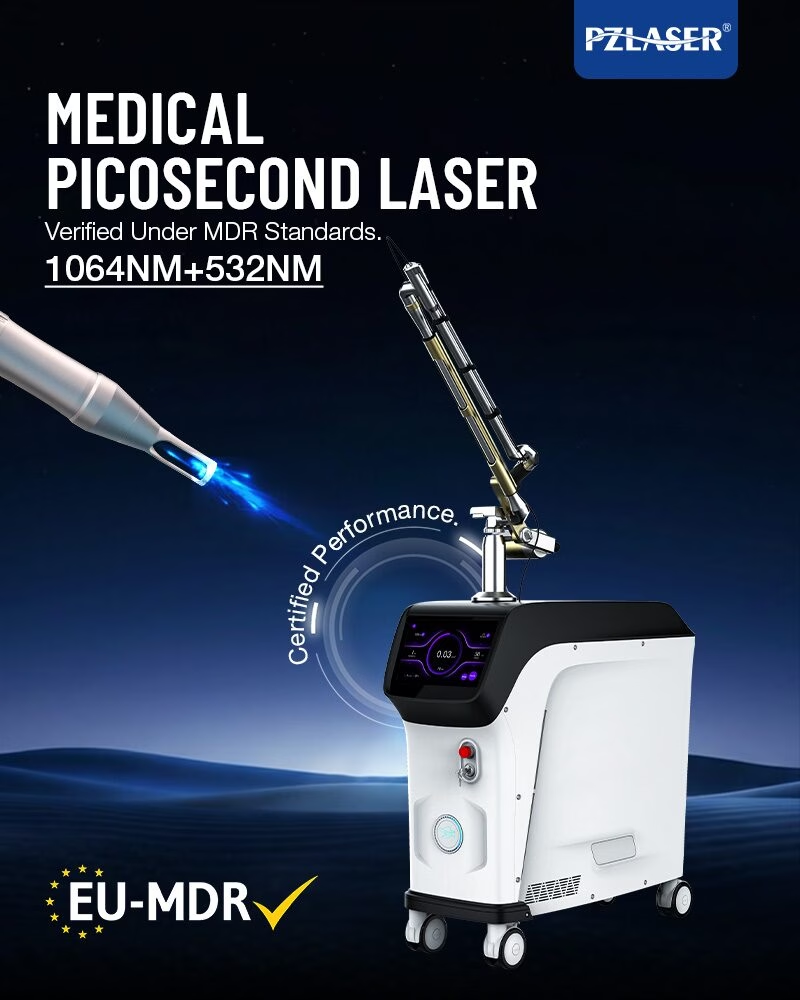
Adjustable 2–10 mm Spot Size
PicoIris® system provides an adjustable 2–10 mm spot size, with 1 mm adjustment steps. This allows operators to select different spot sizes according to the treatment area and application, providing greater flexibility during daily clinical operation.
Flexible 7-Joint Light Guide Arm
A 7-joint light guide arm provides flexible positioning during treatment. Its adjustable structure helps operators access different treatment areas more conveniently and supports a smoother treatment workflow.
For clinics and medical aesthetic distributors, the value of a picosecond laser goes beyond pulse duration alone. The PZLASER PicoIris® medical picosecond system helps take your business to the next level.
Conclusion
For buyers evaluating a professional picosecond laser machine, the best approach is to look beyond headline specifications. Wavelengths, pulse characteristics, energy stability, optical components, handpiece design, cooling, certifications, and manufacturer support should all be considered as part of the overall purchasing decision.
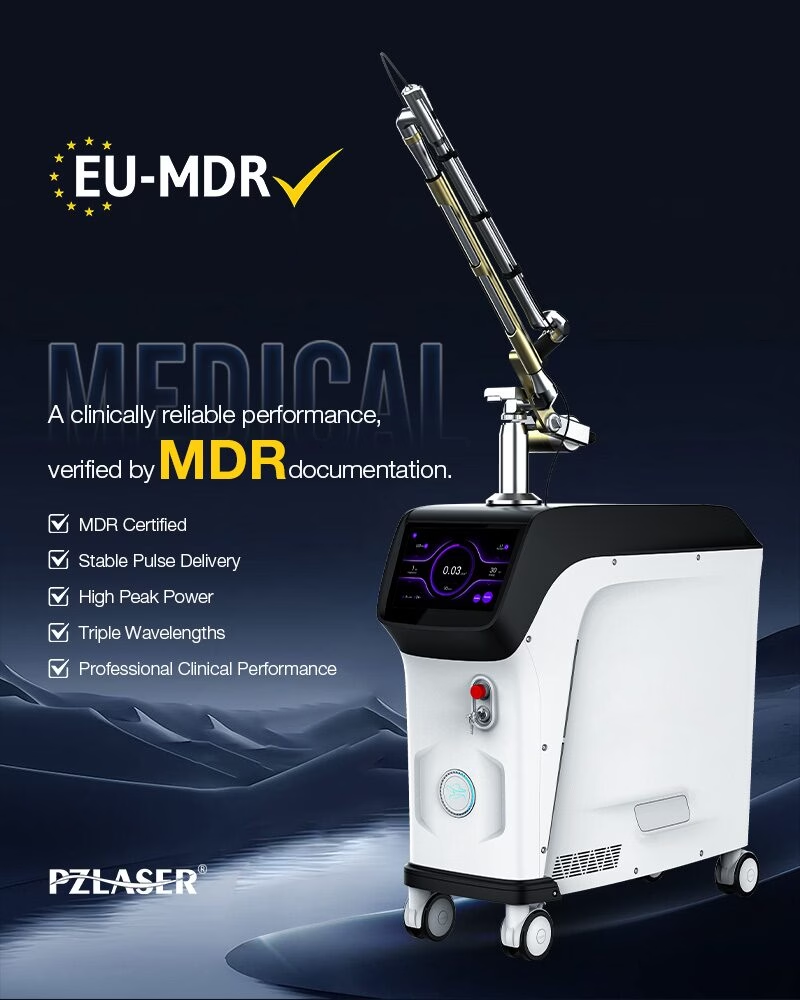
For clinics and distributors looking for a professional picosecond laser solution, PZLASER PicoIris® provides aesthetic laser equipment designed for international medical aesthetic markets.
Frequently Asked Questions About Picosecond Laser
Picosecond lasers are commonly associated with pigmentation treatment, tattoo removal, and selected skin rejuvenation applications.
Picosecond and Q-switched lasers use different pulse durations and can both be useful for aesthetic applications. The most suitable technology depends on the treatment goals, wavelength configuration, device performance, and practitioner protocol.
Picosecond lasers can be used for tattoo pigment fragmentation. However, tattoo removal usually requires multiple treatment sessions, and results vary according to ink color, pigment depth, tattoo characteristics, and individual response.
Look at the complete system rather than one specification. Important considerations include wavelength options, pulse duration, energy stability, spot size, optical design, handpiece ergonomics, cooling, certifications, maintenance, and manufacturer support.
The cost varies according to the laser source, wavelength configuration, specifications, accessories, certifications, manufacturer, and after-sales service. Buyers should compare complete system configurations rather than price alone.