
Quick Answer: What Has Changed in HIFU Machine Technology in 2026?
HIFU machine technology continues to advance through improvements in energy delivery, treatment depth selection, cartridge configurations, and operator controls. Modern aesthetic HIFU systems can offer multiple focal depths and treatment modes to support different facial and body treatment needs.
For example, PZLASER offers two distinct solutions: an MFU + SD system that combines linear and dotting ultrasound approaches, and the MFU PRO MPT, which adds Micro-Pulsed Technology and selectable Normal and Micro Pulse modes on compatible cartridges.
Clinics should evaluate these configurations based on their treatment menus, operating workflows, and equipment requirements rather than assuming one system suits every business.
How Does HIFU Technology Work?
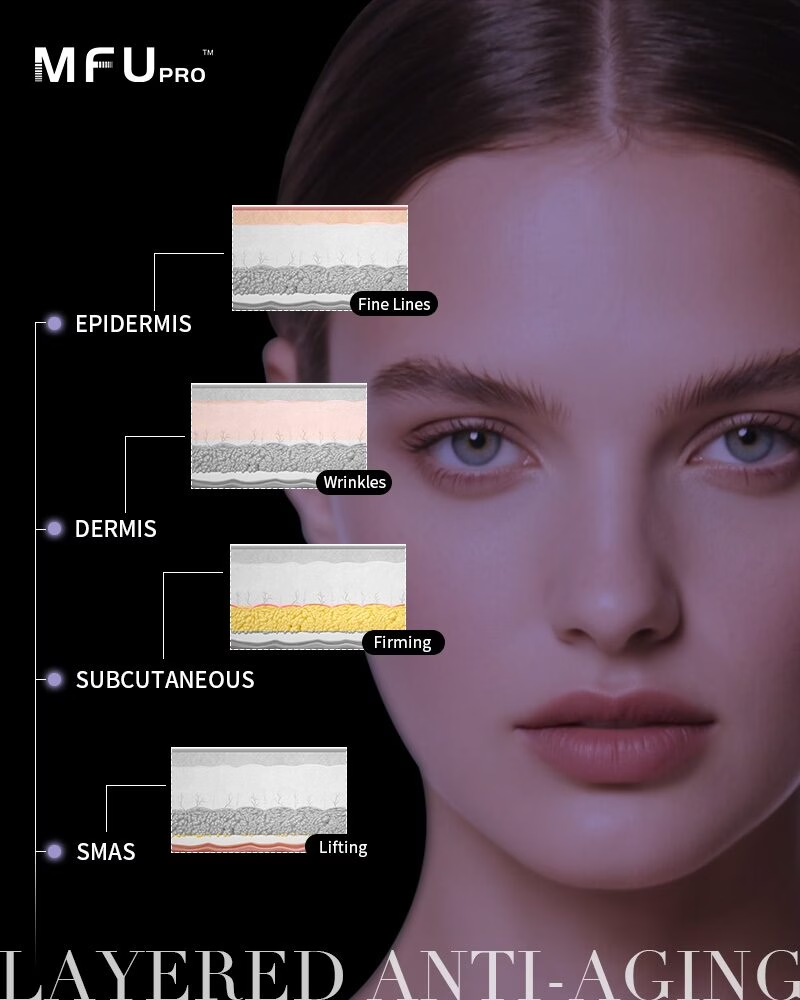
High-intensity focused ultrasound (HIFU) uses focused ultrasound energy to deliver energy to selected tissue depths. This energy can create localized thermal effects that stimulate tissue responses, including collagen remodeling.
Unlike treatments that primarily target the skin surface, focused ultrasound concentrates energy at a selected focal point. Consequently, the focal depth plays an important role in how practitioners plan a treatment.
Microfocused ultrasound (MFU) applies this principle by focusing ultrasound energy at defined depths. Depending on the device configuration, practitioners can select different treatment cartridges to address specific anatomical areas and treatment objectives.
However, HIFU devices do not all use identical energy delivery methods or cartridge configurations. Therefore, clinics should examine each system's technical specifications rather than relying on the HIFU label alone.
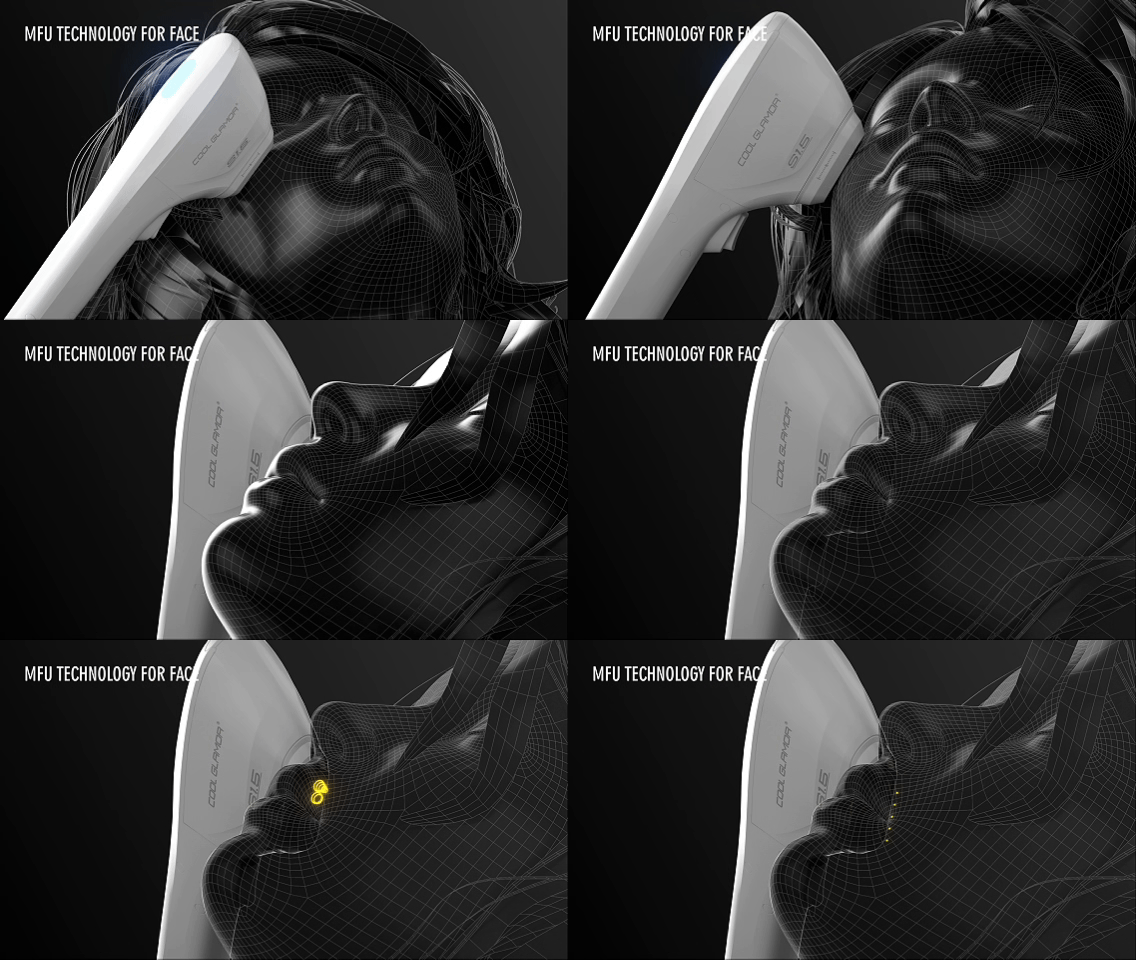
Five Key Areas to Understand in Modern HIFU Machines
When evaluating HIFU technology in 2026, clinics should assess how its technical design supports treatment planning, daily operations, and the services they plan to offer.
1. More Flexible Energy Delivery Modes
Energy delivery modes determine how a device applies ultrasound energy during treatment. Different systems may offer linear, dotting, or other delivery approaches, depending on their design.
For example, PZLASER's original MFU + SD system combines two technologies:
- MFU (Microfocused Ultrasound): Provides a focused ultrasound approach using linear treatment procedures.
- SD (Synergy Dotting): Adds a dotting treatment approach that can follow the linear procedure.
This combination supports a dual-approach treatment workflow.
This distinction matters because clinics can evaluate whether they need a combined linear-and-dotting approach, selectable energy delivery modes, or both, depending on their treatment protocols.
2. Multiple Focal Depths for Different Treatment Areas
Treatment depth is another important factor when choosing an aesthetic HIFU machine.
Different treatment areas have different anatomical characteristics. Therefore, a device with multiple focal depths can provide more options when practitioners plan treatments for the face or body.
3. Cartridge Configurations for Different Treatment Needs
Cartridges influence the available treatment depths and application options. As a result, buyers should review the complete cartridge configuration before selecting a machine.
4. Operator Controls and Treatment Workflow
Aesthetic equipment should support a clear, manageable workflow. Therefore, buyers should evaluate the control interface, treatment mode selection, and cartridge handling alongside the device's energy specifications.
5. Safety Features and Treatment Comfort
Safety design is essential when evaluating any professional aesthetic device. However, buyers should distinguish between individual safety features and evidence of overall clinical safety.

What Should Clinics Look for When Buying an HIFU Machine in 2026?
Technical features are only part of the purchasing decision. Clinics should also evaluate the supplier, the supporting documentation, and the long-term requirements of operating the equipment.
First, review the technical specifications. Confirm the available focal depths, cartridge types, operating modes, and intended treatment areas. Do not assume that all HIFU systems offer the same functions.
Second, examine the safety documentation. Review the manufacturer's operating instructions, relevant safety features, training requirements, and applicable regulatory documentation for the intended market.
Third, assess the treatment workflow. Consider whether the interface and cartridge configuration suit the clinic's daily operations. A machine should support the intended service menu without introducing unnecessary complexity.
Finally, evaluate the manufacturer. Technical training, maintenance guidance, spare-parts availability, and responsive after-sales support can all influence the long-term ownership experience.
For distributors, it is also important to confirm the available configurations, documentation, customization options, and market-specific compliance requirements before placing an order.
Two PZLASER HIFU Solutions for Different Clinic Needs
PZLASER MFU + SD System: A Combined Linear and Dotting Approach
The MFU + SD system combines Microfocused Ultrasound (MFU) with Synergy Dotting (SD).
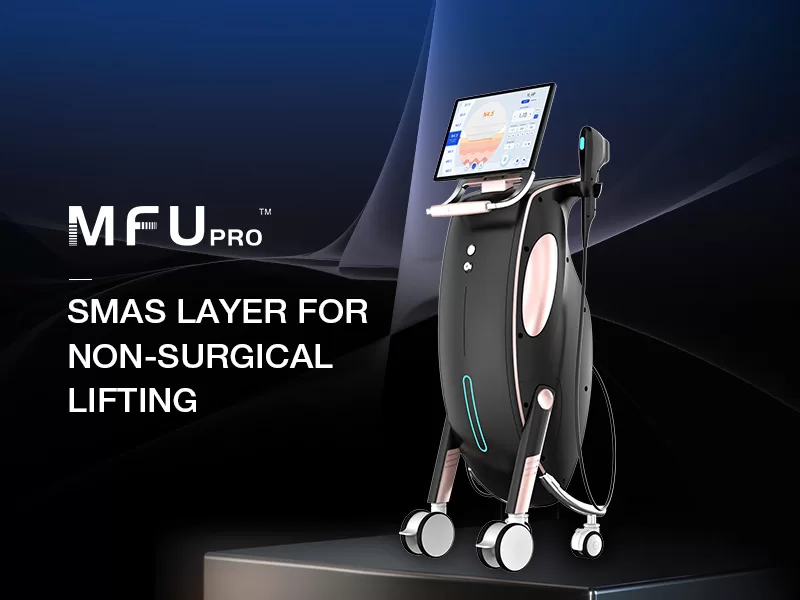
Its configuration includes 6 FL cartridges and 4 SD cartridges, with focal depths ranging from 1.5 mm to 9.0 mm across the listed FL depths. The SD cartridges support four facial depth options, with manual penetration-depth adjustment described in the product brochure.
The system also includes contact and movement sensors for the FL cartridges and a gyroscope sensor for SD operation.
Key configuration highlights:
- MFU + SD technology combination
- Up to 10 cartridge types
- Six FL cartridge types for face and body applications
- Four SD cartridge types for facial applications
- Sensor-based operating safeguards
- 15.6-inch Android-based intelligent interface
This configuration may suit clinics that want to combine linear and dotting treatment approaches within one platform. It also suits businesses that prioritize a specific combination of facial and body treatment depths.
The appropriate configuration ultimately depends on the clinic's services, practitioner training, and treatment protocols.
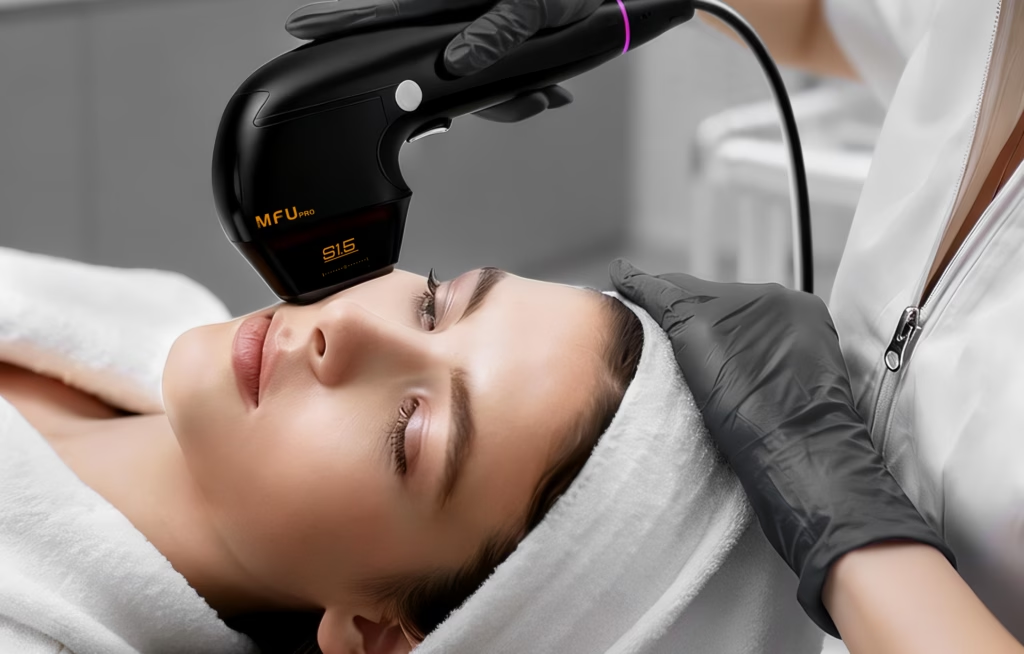


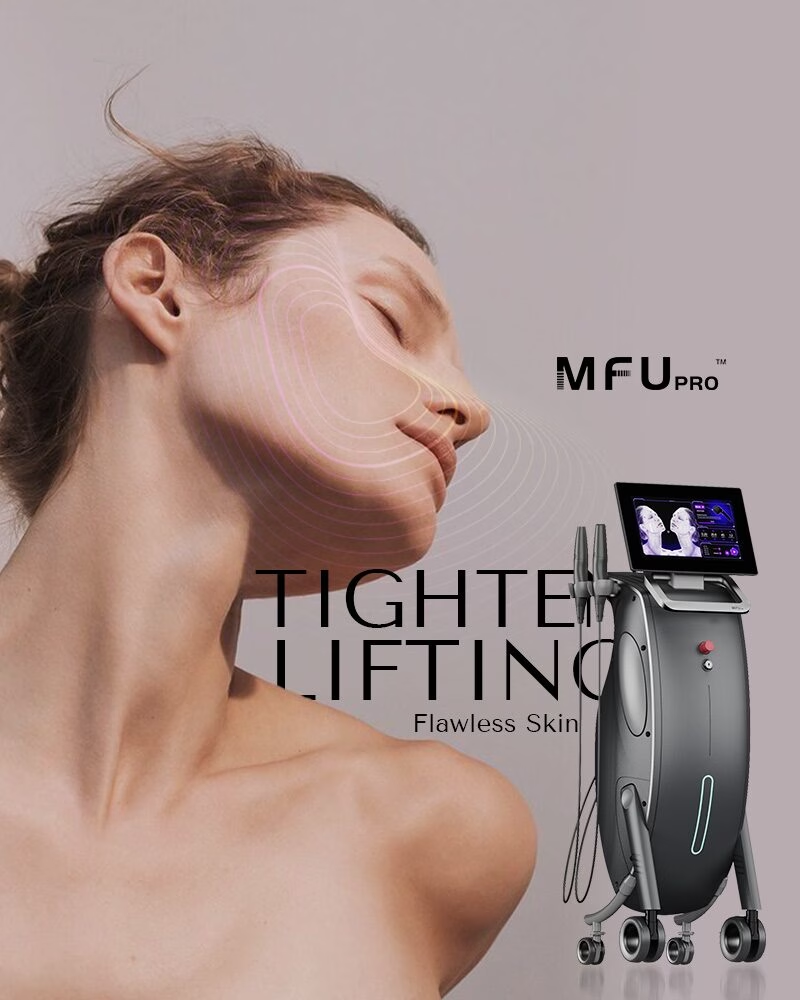
PZLASER MFU PRO MPT: Micro-Pulsed Technology and Multiple Operating Modes
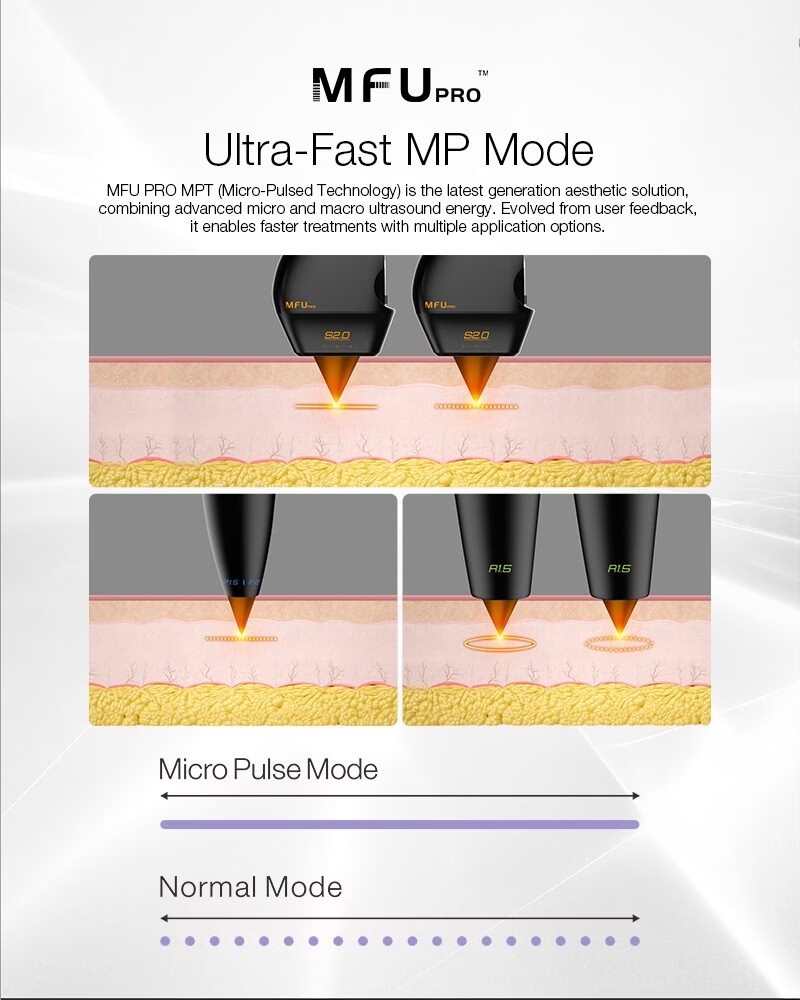
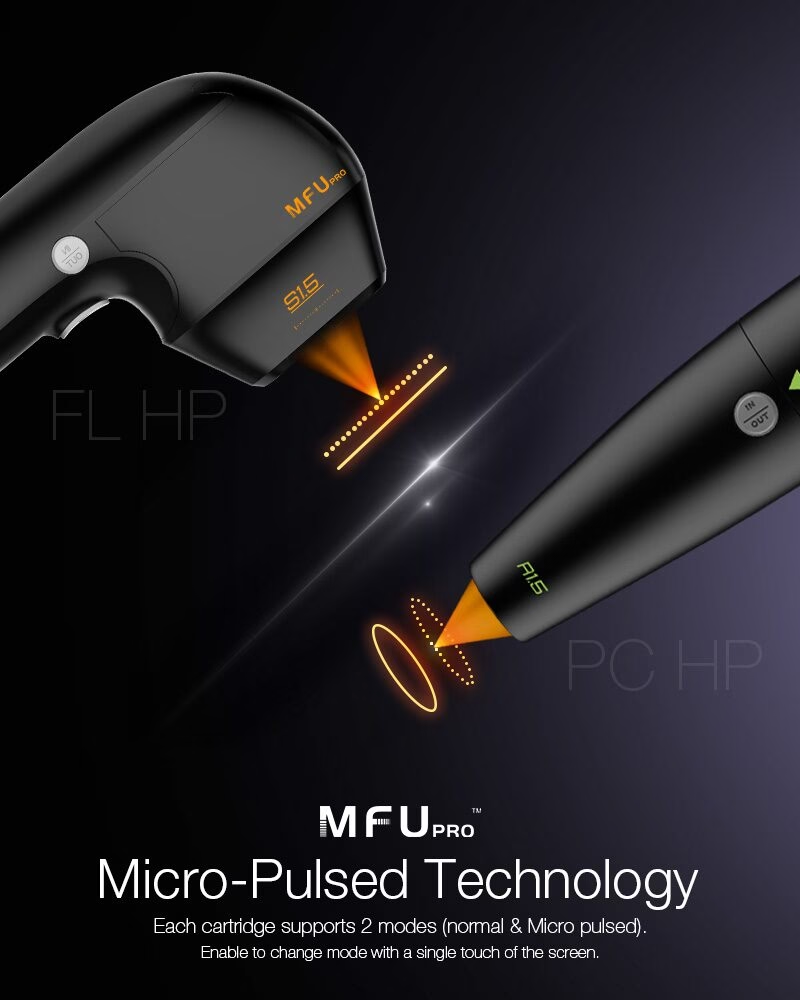
The MFU PRO MPT introduces Micro-Pulsed Technology, which the product brochure describes as combining micro and macro ultrasound energy.
The system offers FL, SD, and PC cartridge configurations. Its FL cartridges cover facial depths of 1.5 mm, 2.0 mm, 3.0 mm, and 4.5 mm, as well as body depths of 6.0 mm, 9.0 mm, and 13.0 mm.
In addition, the FL and PC cartridges support both Normal Mode and Micro Pulse Mode. Operators can select the desired mode through the touchscreen.
Key configuration highlights:
- Micro-Pulsed Technology (MPT)
- Up to 12 cartridge types
- Seven FL cartridge types, including a 13.0 mm option
- One SD cartridge type
- Four PC cartridge types
- Normal Mode and Micro Pulse Mode on compatible FL and PC cartridges
- Touchscreen mode selection
This configuration may suit clinics that want selectable treatment modes and a broader set of cartridge options, including the 13.0 mm FL cartridge.
As with any aesthetic device, practitioners should follow the manufacturer's instructions and select appropriate settings for each treatment area.
How Should Clinics Choose Between These Two Systems?
Neither configuration suits every clinic. Instead, buyers should start with their business requirements and then compare the technical specifications.
| Evaluation factor | Original MFU + SD system | MFU PRO MPT |
|---|---|---|
| Core technology | MFU + SD | MFU PRO MPT |
| FL cartridge types | 6 | 7 |
| SD cartridge types | 4 | 5 |
| Listed FL focal depths | 1.5–9.0 mm | 1.5–13.0 mm |
| Selectable Normal and Micro Pulse modes | Not listed | Available on FL and PC cartridges |
| Notable design feature | Combined linear and dotting approach | Micro-Pulsed Technology and selectable modes |
Before purchasing, clinics should consider the following questions:
- Which facial and body treatments will the clinic offer?
- Which focal depths and cartridge types do practitioners require?
- Does the clinic prefer a combined linear-and-dotting approach or selectable operating modes?
- What training, maintenance, and after-sales support will the manufacturer provide?
- Which configuration aligns with the clinic's investment plan and expected service demand?
By answering these questions, buyers can select the system that best fits their operating model.
Conclusion: Choose HIFU Technology That Fits Your Clinic
HIFU machine technology offers different ways to configure focused ultrasound treatments, from multiple focal depths to different energy delivery approaches and operating modes. Therefore, clinics should assess the complete system rather than focus on a single specification.
PZLASER provides two options for different business requirements: the original MFU + SD system, which combines linear and dotting approaches, and the MFU PRO MPT, which introduces Micro-Pulsed Technology and selectable modes on compatible cartridges.
For product specifications, configuration details, and cooperation inquiries, contact us.
Frequently Asked Questions About HIFU Machine Technology
Current HIFU systems offer different approaches to energy delivery, focal depth selection, cartridge configuration, and operator controls. Some systems also provide selectable treatment modes. However, these features vary by model, so buyers should review each device's specifications rather than assume that every development is available on every machine.
In the PZLASER MFU PRO MPT, Micro-Pulsed Technology combines micro and macro ultrasound energy. The system offers Normal Mode and Micro Pulse Mode on compatible FL and PC cartridges, and operators can switch modes through the touchscreen.
Some systems support both facial and body applications through different cartridge configurations. For example, the PZLASER original MFU + SD system lists facial FL depths of 1.5–4.5 mm and body FL depths of 6.0–9.0 mm. The MFU PRO MPT adds a 13.0 mm FL cartridge. Actual suitability depends on the device's intended use, practitioner assessment, and treatment protocol.